For fifteen years, a small group of scientists in the UK has been wrestling with a biological paradox: cells that won’t live but won’t die. They call them senescent cells — “zombie cells” to the rest of us — and they are thought to be a root cause of ageing itself. The researchers at SENISCA, a spin-out from the University of Exeter, treat this as a pharmaceutical problem. Their goal is not smoother skin. It is age-related disease. They work inside a world of clinical trials, regulatory hurdles, and safety testing that could stretch on for years before anything reaches a patient.
They have not yet produced a consumer product.
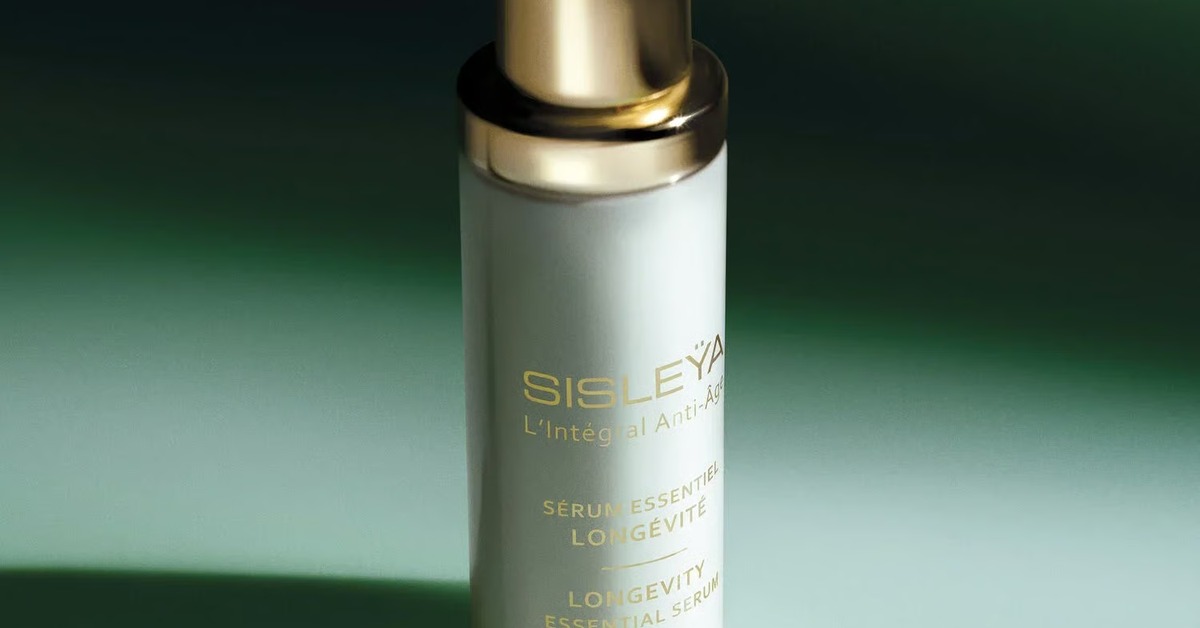
And yet, in September 2025, Sisley Paris launched a serum that suggests the problem is already solved.
The Sisleÿa Longevity Essential Serum retails for €310. Its promise, laid out in the brand’s marketing language: reduce senescent cells by 15%, boost the immune response that clears them by 45%.
So where do those numbers come from? Not from Sisley’s own laboratories. They trace back to a French company called SILAB, an ingredient manufacturer few consumers have ever heard of. SILAB doesn’t sell face creams; it sells active compounds to the brands that do. One of those compounds is called Senevisium®, which its CEO describes as the first ingredient to identify the consequences of ageing cells evading immune clearance.
The evidence behind the 15% and 45% claims rests on two pillars. The first is SILAB’s laboratory experiments, conducted on a 3D skin model — not on human participants, and not at the concentration found in the serum. The second is a 28-day trial in which women over 60 were asked whether their skin felt firmer. That is a satisfaction survey. It is not a clinical measurement. None of this work has been published in a peer-reviewed journal, and no clinical trial has been registered for the serum itself.
Free weekly newsletter
Get every new investigation directly in your inbox.
Science Checks and Brand Checks across the anti-ageing industry — delivered free.
This gap between promise and proof was already visible in 2021, four years before Sisley’s launch. Dr. Leslie Baumann, whose textbook is the standard reference in cosmetic dermatology, addressed the question directly. “It is too early for any research to translate to efficacious cosmeceuticals,” she wrote. “I am closely watching this research and will let you know if there are any similar data on topical cosmeceuticals targeting senescence or autophagy.” The data, as of 2025, have not arrived.
Under European Union law, any product that claims to alter the body’s immune response is classified as a drug, not a cosmetic. Sisley’s serum claims a 45% increase in immune cells and references a Ginkgo extract “aimed at strengthening the immune system.” An EU compliance consultancy identifies the phrase “activates your skin’s immunity” as an inadmissible claim in cosmetic marketing. It describes such language as sounding “more like the action of a vitamin booster from the medical sector than a simple cosmetic product.”
Behind the €310 serum and its talk of zombie cells sits a supplier’s unpublished lab experiments and a 28-day questionnaire about skin firmness. The real scientists in the field are still in the lab, still running their trials, still years away from a product.