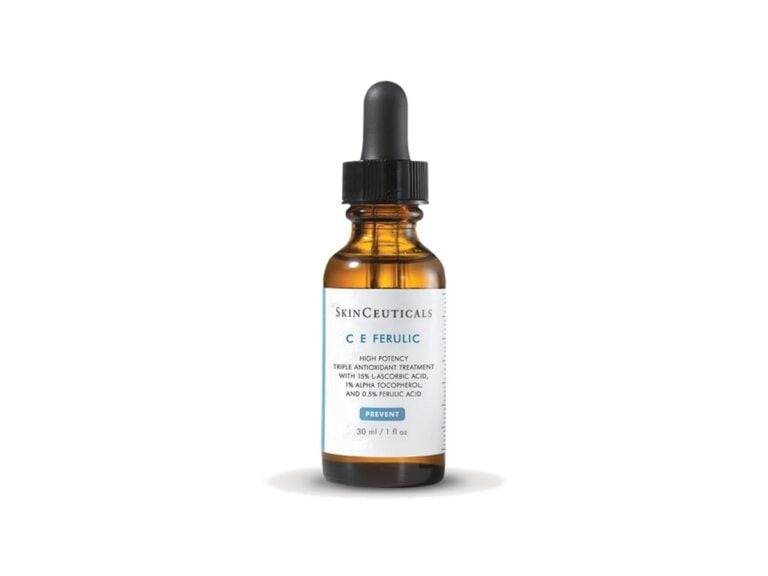
The bottle costs £32 and sits on the shelf at Ulta, Sephora and every salon that has ever bleached a client blonde. It promises something unusually specific for a beauty product: not shine, not softness, but repair – of a molecular structure inside each strand, broken by bleach and put back by chemistry.
Millions of people have bought that promise. What they’re buying is a claim about something nobody can see.
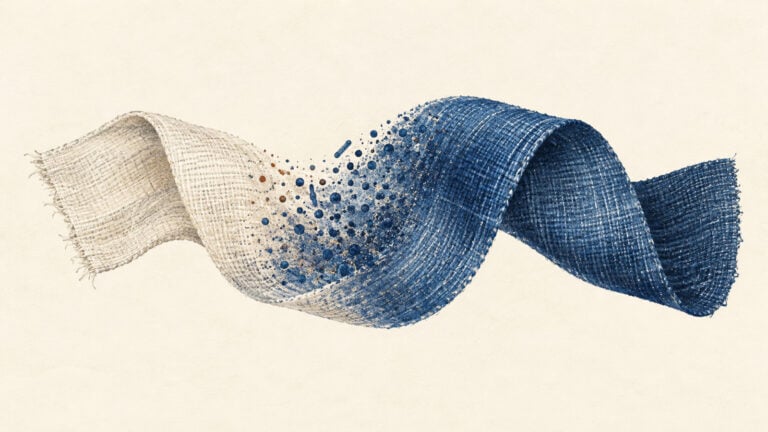
Olaplex is built on one molecule: bis-aminopropyl diglycol dimaleate. Hair gets its strength from disulfide bonds – sulphur-to-sulphur links that hold the protein structure together. Bleach breaks them. The Olaplex molecule is designed to find the broken ends and bridge them.
The brand’s training materials make the claim without hedging: Olaplex is the only bond-builder that re-links and repairs broken disulfide bonds. The marketing figures are equally definite – 68% more repair and three times stronger hair for No.3 (used with No.0), and three times stronger, three times softer for No.3PLUS, launched in February 2026.
Chemists Eric Pressly and Craig Hawker developed the molecule at the University of California, Santa Barbara, using click chemistry. Barry Sharpless won a Nobel Prize for that chemistry, and once singled out Olaplex as the most interesting company, other than his own, built on it.
That pedigree is real. In 2024, someone finally tested whether it holds up in the bottle.
A team at Universidade Católica Portuguesa and the University of Porto, led by Eva Martins, bought Olaplex off the shelf, damaged real hair with bleach, and tested it directly. Their finding: it does make hair stronger; it just is not necessarily doing so in the way the label claims.
Treated fibres were 47.6% stronger under tension than bleached, untreated hair – the largest improvement the team measured, ahead of its main rival, K18.
However, the researchers ran two separate tests on the bonds themselves. One counted any new sulphur bond formed. The other checked specifically for the type of bond bleach destroys and the label promises to rebuild. Olaplex passed the first test convincingly but did not pass the second.
A related study in Bologna, which tested a broader class of this chemistry, also found no evidence of that specific bond forming, although it could not confirm that the products tested were Olaplex’s own.
People cite Olaplex’s 2019 courtroom win over L’Oréal as proof the science works, but the verdict was reversed on appeal in 2021. It is not proof of anything.
A 2023 lawsuit alleging hair loss and scalp damage was dismissed on procedural grounds, not on the merits, and no ruling was made on whether the harm occurred. A separate shareholder settlement, still unresolved, awaits final court approval on 27 July.
The strongest independent test of Olaplex found hair 47.6% stronger, but could not confirm the bond described on the label.