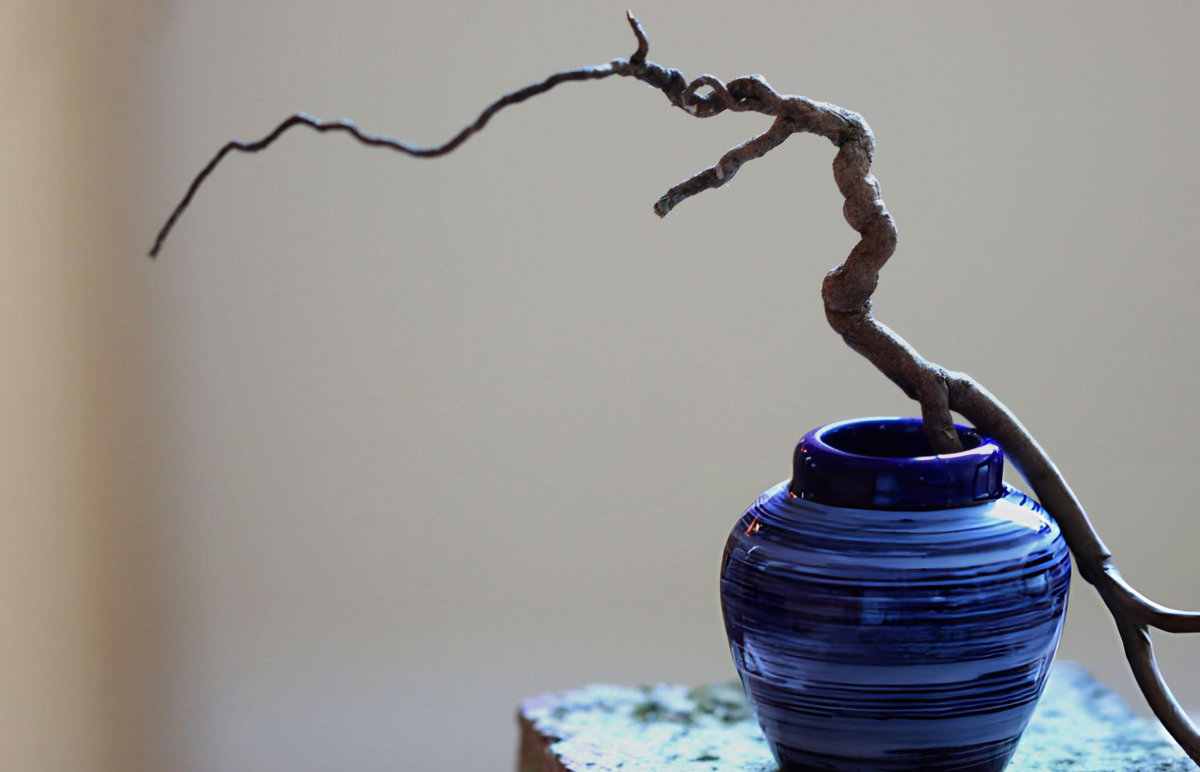
What ikebana teaches about impermanence and acceptance
In a small studio in Sydney, Gwyneth holds a single camellia branch between her fingers. The stem is crooked, the leaf weathered—exactly as she wants. Each movement is measured as she positions it in the vase, adjusting the angle precisely. The sound of water. A quiet moment of satisfaction when everything falls into place.
In Western floristry, that bent stem would go straight in the bin. In ikebana, it is the star.
‘Those perceived flaws are welcomed,’ she explains. ‘A crooked stem, a weathered leaf—they all have a place in the arrangement.’
Free weekly newsletter
Get every new story directly in your inbox.
Craft Heritage features of artisan traditions — and the pressures they face — delivered free.
This philosophy did not emerge overnight. Its origins stretch back to sixth-century Buddhist temples, where monks placed flowers before statues of Buddha. These simple offerings—called kuge—eventually became something more: kado, the Way of Flowers.
The Ikenobo school of Buddhist monks started experimenting. By the 17th century, they had created rikka—towering arrangements in bronze vases that represented entire landscapes. The main branch symbolised heaven or truth, while other branches had their own symbolic roles. These were not just pretty flowers; they were miniature universes.
Then the tea ceremony provoked a backlash. Chabana, or ‘tea flowers’, reduced arrangements to their essence—just one or two stems in a small container. Natural. Spontaneous. The complete opposite of those formal rikka displays.
That tension between formality and simplicity has defined ikebana ever since. Today, over 15 million people in Japan practise ikebana, and it has spread to more than 50 countries. The tradition continues to evolve while remaining true to its core: working with seasonal rhythms and respecting nature’s cycles.
Masters of renewal
Kayoko Kondo-san has been practising for almost 20 years and teaching for seven. She originally turned to ikebana to reconnect with her Japanese roots after spending years immersed in Western studies.
‘Ikebana is a lifelong path,’ she says. As an artist, her role is to give cut plants a ‘second life’, making the materials ‘more beautiful than before they were cut’. She takes this responsibility seriously.
The technical side is demanding. Artists must know each plant intimately—which materials ‘can bend easily with the warmth of your palms’, which are ‘stiff and prickly’, and how long different stems last in water. There is even a specific technique called mizugiri: cutting stems underwater to keep them fresh for longer.
Master Tetsunori Kawana puts it plainly: ‘nature is perfect. What we are doing is removing something that is already perfect and must give it new life‘. That is the standard practitioners set for themselves—matching nature’s perfection while showing it deep respect.
The commitment is profound. Many practitioners remain active in their 70s, 80s, and even 90s. Ikebana is not something to be mastered and then left behind; it deepens with age.
Lessons in letting go
Ikebana’s principles extend into daily life. Practitioners learn to accept change, value empty space and silence, and find meaning in transitions.
The art embodies the Zen Buddhist idea of mujo—impermanence. These arrangements do not last. They cannot. They are alive, which means they fade and die. Unlike silk flowers gathering dust on a shelf, ikebana celebrates that cycle: birth, growth, decay, rebirth.
‘Beauty doesn’t have to be permanent to be meaningful,’ Gwyneth says.
Space matters as much as the flowers. Minimalism is central to Zen philosophy—the idea that abundance is not required to create meaning. Kondo-san prefers minimalistic ikebana, using only one flower and one leaf. With skill and understanding, less becomes more.
The practice resists modern culture’s obsession with speed. Ikebana is like ‘walking through a forest‘, Kondo-san says. It helps practitioners calm down and forget their daily stress. In a world obsessed with instant results, ikebana teaches patience, presence, and acceptance that some things cannot be rushed.
The crooked branch in Gwyneth’s studio embodies this philosophy. Beauty lives in imperfection. Mastery is not about controlling nature—it is about honouring what is already there.
Frequently Asked Questions
How does someone begin learning ikebana?
Most students join classes through one of three major schools: Ikenobo (oldest), Ohara (naturalistic), or Sogetsu (modern). Each has its own philosophy and ranking system. Beginners learn basic forms—how to cut stems, use empty space, and arrange the symbolic heaven-earth-humanity structure. Students progress through levels over years. Many find the weekly lessons become a meditative practice that connects them with seasonal changes.
What are the essential tools and supplies needed for starting ikebana?
You need three basics: ikebana scissors (sharp, for precise cutting), a kenzan (metal pin holder), and a shallow container. Start with one kenzan and a simple ceramic vessel before buying specialty pieces. A round kenzan about 3 inches wide works well for beginners. Fresh seasonal materials come from gardens, florists, or foraging. The initial investment is modest—budget-friendly containers work perfectly.
Can someone with no experience start learning ikebana, and where are classes typically offered?
No experience needed. Ikebana schools welcome complete beginners. Look for certified instructors in major cities through cultural centres, botanical gardens, or private studios. Schools list chapters and teachers on their websites. Classes run weekly or monthly. Students progress at their own pace. Some instructors offer one-off workshops for curious beginners. Online tutorials exist but hands-on instruction is strongly recommended.
Do the arrangements need special care to last longer?
Practitioners cut stems underwater (mizugiri technique) to prevent air bubbles. They remove lower leaves and refresh water daily. But ikebana deliberately embraces impermanence. Materials naturally age and wilt. This is part of the beauty. Some practitioners adjust arrangements as flowers fade—removing spent blooms or repositioning stems. The practice teaches that beauty exists at every life stage, including decline.
Can ikebana be practised outside of Japan?
Yes. Ikebana thrives in over 50 countries with active communities worldwide. Practitioners work with local plants—eucalyptus in Australia, birch in Europe, native wildflowers everywhere. Core principles adapt to any environment. Certified instructors teach in major cities through Japanese school chapters. The philosophy resonates especially in fast-paced Western cultures. It offers a structured way to slow down and practice mindfulness.