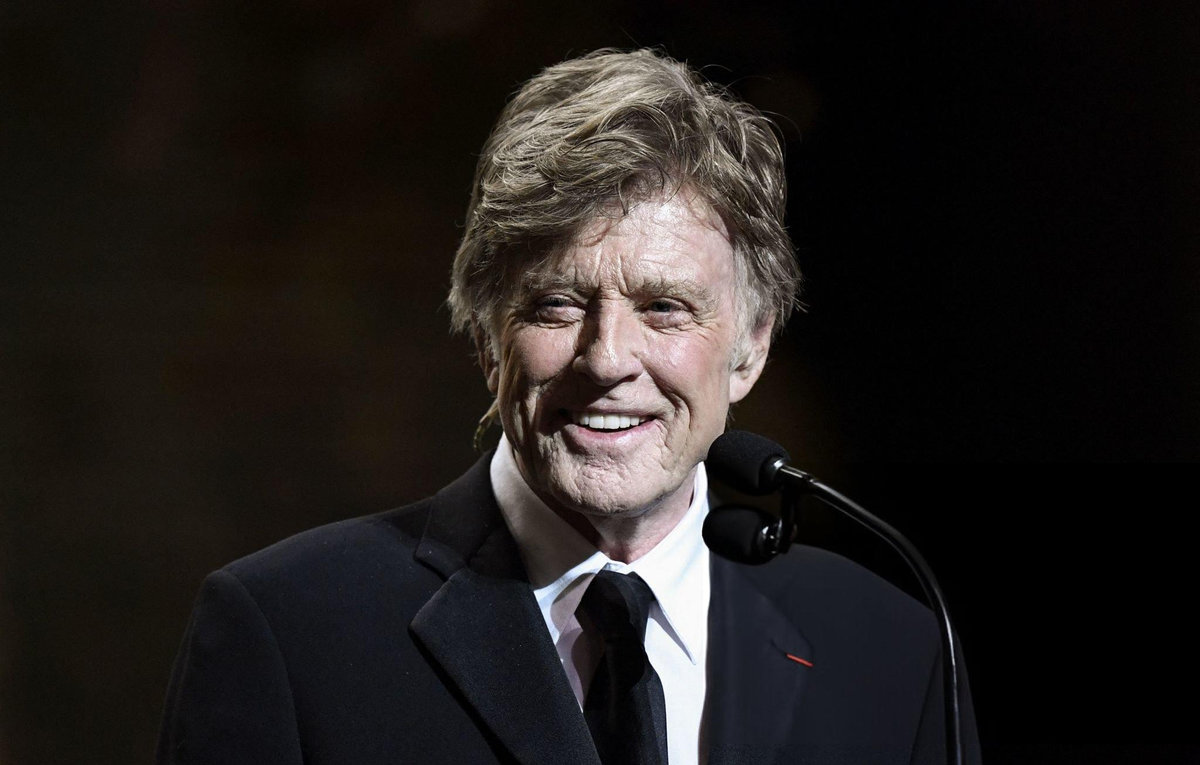
James Woods arrived for his casting session with Robert Redford in the late 1980s and immediately began challenging the actor-director on Vietnam policy. The conversation had nothing to do with the film. Woods pressed his political arguments while Redford listened, then stood up and walked out of the room without a word.
In a subsequent audition, Woods broke character mid-scene to deliver a lecture on Cold War foreign policy. Again, Redford left. When asked later about Woods, his response was direct: “if I wanted a debate… I’d go back to college.” Woods never appeared in another Redford project. His assessment was blunt: “I wasn’t interested in managing that energy.”
Redford had built his Hollywood prominence through careful progression. He moved from television appearances in the late 1950s to his breakthrough role alongside Paul Newman in Butch Cassidy and the Sundance Kid in 1969. By the 1970s, he was among the industry’s most bankable stars, commanding substantial fees and creative control. Yet his willingness to walk away from profitable collaborations became his trademark.
In 1976, during production of All the President’s Men, tensions developed between Redford and Dustin Hoffman over working methods. Hoffman favoured improvisation, changing dialogue and repositioning himself during takes. During one phone conversation scene, he performed seven different versions with varying tones and unscripted lines. Redford’s frustration became apparent to those on set. Years later, when asked why the two iconic stars never worked together again, Redford’s answer was brief: “Once was enough.”
His conflicts were not limited to established stars. During production of The Natural, Redford clashed with Robert Duvall over the actor’s improvisational approach. Duvall refused to stick to the script, leading to a behind-the-scenes confrontation. Redford told him: “It’s not your movie.” Duvall retorted: “It’s not anyone’s until it’s real.” After filming wrapped, Redford said simply: “he’s brilliant but I don’t need to go through that again.” They never worked together again.
Similarly, while directing Fay Dunaway in Three Days of The Condor, Redford grew irritated with her demanding nature and constant requests for multiple takes. During one heated exchange, he snapped: “It’s espionage Fay not Chekhov.” No further collaborations followed.
Even his relationship with Paul Newman encountered professional friction. When they reunited for The Sting in 1973, Newman sought increased producer control. Redford felt marginalised, later describing himself as becoming “the footnote to Newman’s face.” Despite their public friendship continuing, they never made another film together. “Trust was the problem,” Redford explained.
By the 1970s, Redford was spending increasing time at the Utah cabin he had built in 1961. He purchased the two acres for $500 and constructed it with his own hands. He described his relief at escaping what he called the “Zen hell of celebrity” — his term for the contradictory peace and torment of fame. In interviews, he expressed feeling trapped by his leading man image: “I didn’t see myself the way others saw me and I was feeling kind of trapped because I couldn’t go outside the box of good-looking leading man.”
Yet Redford also used his celebrity when it served his purposes. His move into directing reshaped his public image from movie star to filmmaker. His 1980 directorial debut, Ordinary People, won the Academy Award for Best Picture and earned him the Oscar for Best Director.
In 1981, he founded the Sundance Institute, creating what became the country’s largest showcase for independent film. His fame was necessary to attract the attention and funding of unknown filmmakers. Sundance launched the careers of directors including Steven Soderbergh with Sex, Lies, and Videotape, Quentin Tarantino with Reservoir Dogs, and Ryan Coogler with Fruitvale Station. The festival became a launch pad for films that might never have found distribution through traditional studio channels.
From his base in Utah, Redford became deeply involved in environmental advocacy. He opposed strip mining in the American West, campaigned against nuclear power plants, and fought for the preservation of wilderness. In 1988, he publicly blamed the Reagan administration for “water abuse” while standing alongside the polluted Calumet River in Illinois. He argued that environmental spending “should be on the same level as defense and military strengths.” His activism brought him recognition from conservation organizations and the Presidential Medal of Freedom from President Barack Obama in 2016.
When Redford died at his home in Utah on 16 September 2025, he had lived there for over six decades. The man who walked away from lucrative collaborations and fame had instead built something more enduring — a festival that launched careers, an environmental movement, and a legacy rooted in principles he refused to sacrifice.