He demanded absolute freedom through absolute control. He erased his name so that no label, no corporation, no earthly power could own it. He built a private kingdom of purple velvet and locked the gates.
Prince Rogers Nelson was born in Minneapolis in June 1958, the son of a jazz pianist and a jazz singer. His father’s stage name was Prince Rogers. He gave it to his son. When the boy was about ten, he left. The piano stayed.
The piano was the first thing in his life he could fully master. He would spend the rest of his life trying to master everything else.
Free weekly newsletter
Get every new profile directly in your inbox.
The human stories behind the most constructed public personas — delivered free.
The marriage had been violent. Tyka Nelson, Prince’s sister, later described their father’s transformation when he lashed out at their mother. Prince moved between his parents’ homes, then ran away entirely, sleeping on neighbours’ floors.
He had suffered epileptic seizures since birth. He kept this private until 2009, when he told journalist Tavis Smiley: “I’ve never spoken about this before, but I was born epileptic. I used to have seizures when I was young.” He was teased at school. He compensated, he said, by being “as flashy as I could and as noisy as I could.”
The piano his father left behind was forbidden while the father was present. “I wasn’t allowed to play it when he was there because I wasn’t as good as him,” Prince told Smiley. “So when he left I was determined to get as good as him.” His father had been merciless: “It was almost like the army when it came to music. ‘That’s not even close,’ he’d say.” In that severity, Prince found his engine. He played until the neighbours heard him.
Mastering the piano was only the first step. In 1977, at nineteen, he had thrown Warner Bros. executives out of his recording studio when one of them suggested a track needed more bass. “There is no bass on that song,” Prince told them. “Get out of my studio.”
He was a teenager. They were funding his career. He was not wrong.
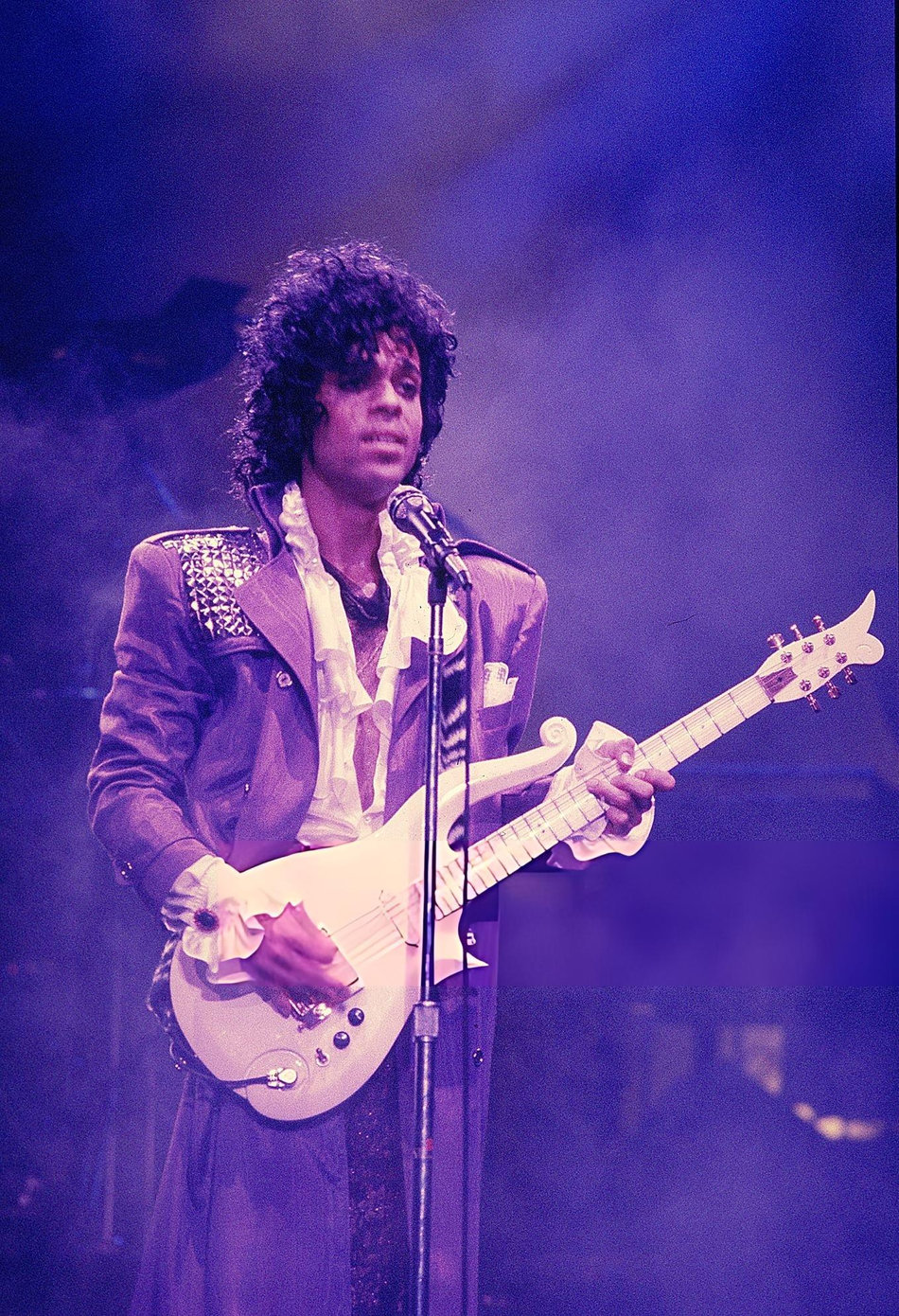
Paisley Park, built outside Minneapolis after Purple Rain made him untouchable. It was not a studio, it was a machine. A climate-controlled vault in the basement, sealed behind a steel door with a time lock and a spinning handle. Only Prince had the combination.
A former employee, Scott LeGere, watched him track drums in Studio A, horns in Studio B, and direct pre-production in Studio C. “He’d just hop,” LeGere said. His vocalist Shelby J. knew the hours: calls came at two in the morning. “He wants to record something. How soon can you get here?” By one estimate, 8,000 songs never left that building. He created albums faster than the music industry could absorb them.
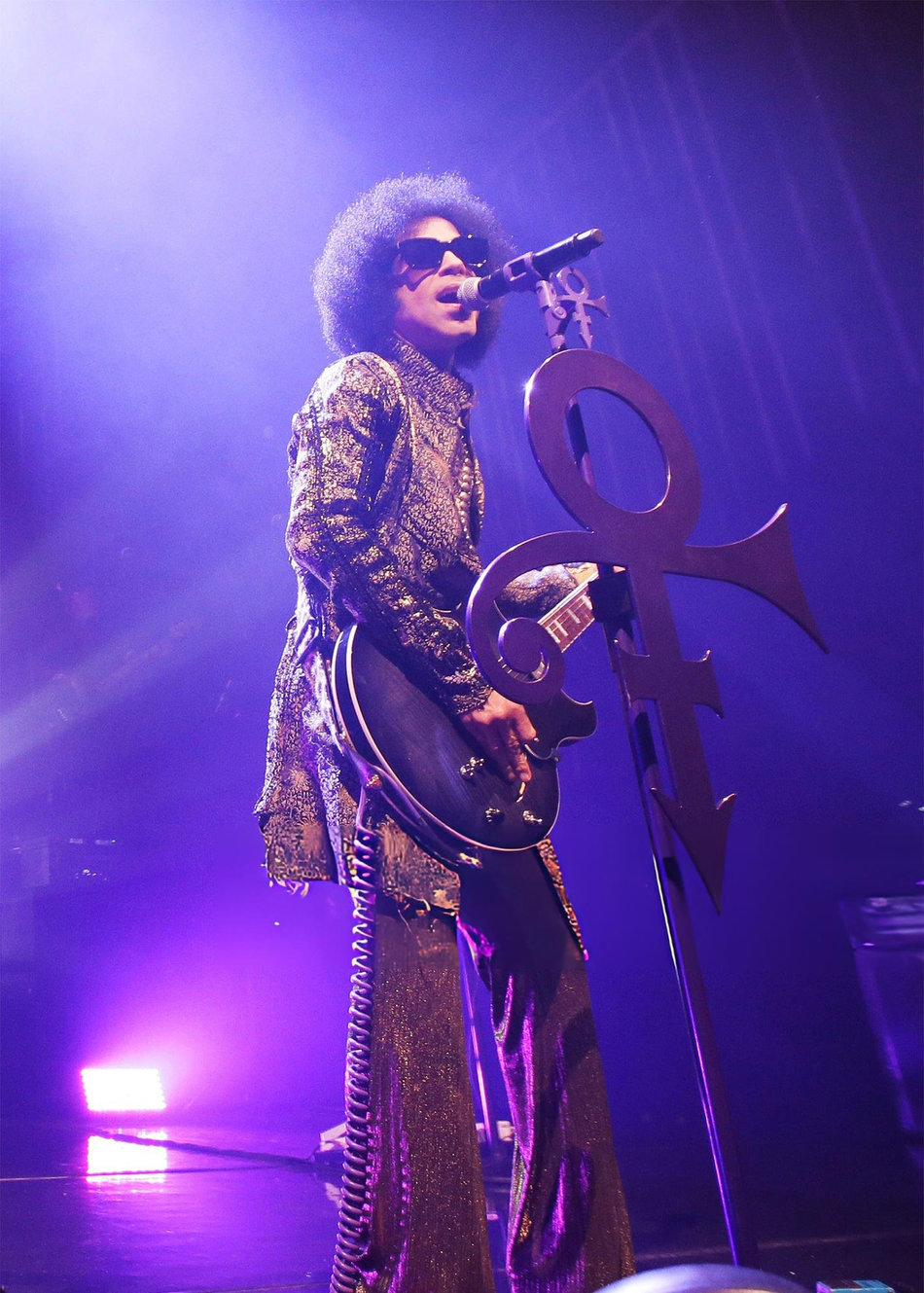
The 1992 contract — $100 million, six albums, one release per year — gave the label what it had always wanted: control of the pace. In 1993, on his thirty-fifth birthday, he changed his name to an unpronounceable symbol. Warner Bros. could not trademark what no keyboard could type.
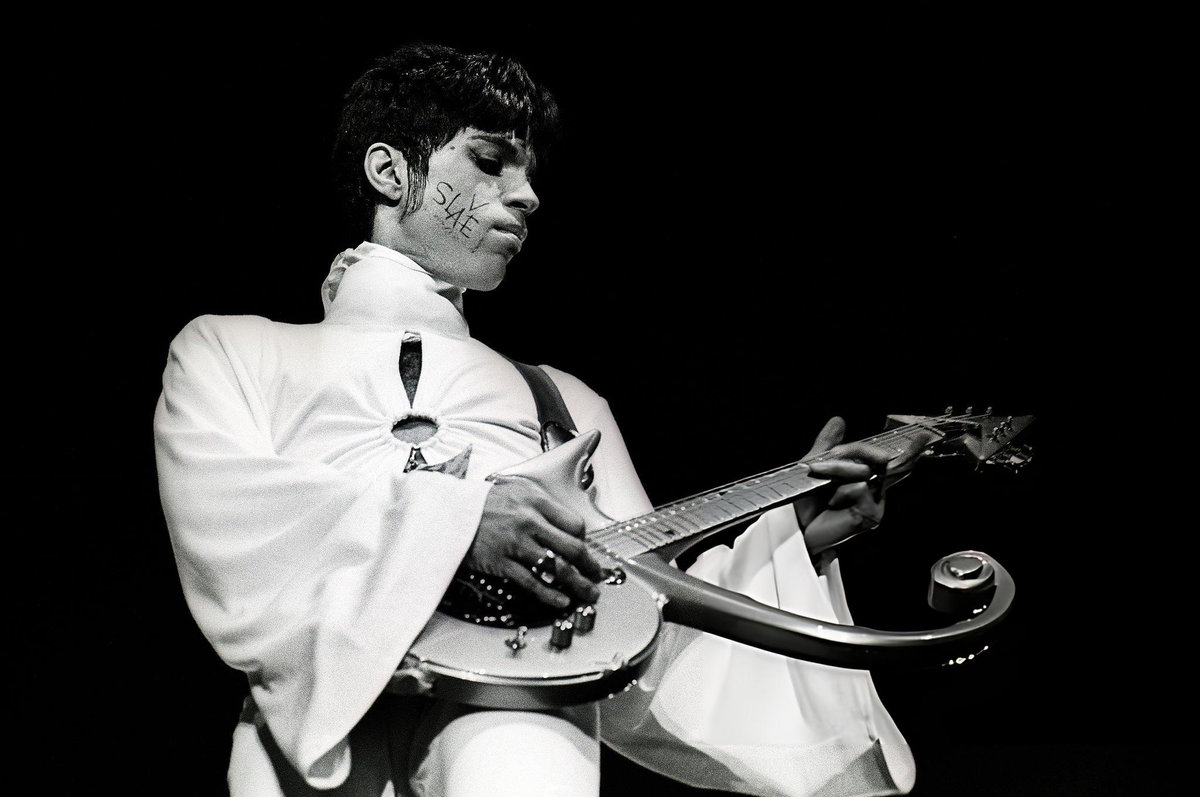
He wrote “SLAVE” on his cheek in ornate script. He wore it on television. He wore it at award ceremonies.

“People think I’m a crazy fool for writing ‘slave’ on my face,” he told Rolling Stone.
“If I can’t do what I want to do, what am I? When you stop a man from dreaming, he becomes a slave. That’s where I was. I don’t own Prince’s music. If you don’t own your masters, your master owns you.”
At the 1995 BRIT Awards, he stood three feet back from the microphone, the Warner Bros. table a few feet away. He delivered it quietly, almost incredulously. The room started laughing.
“Prince? Best? Gold Experience better. In concert, perfectly free. On record, slave. Peace.”
One former Warner Bros. executive said it felt “like getting punched in the solar plexus.”
He left Warner Bros. in 1996. The label kept ownership of every recording he had made under contract. He won his masters back in 2014.
In 1996, his first wife Mayte Garcia was pregnant. He refused amniocentesis testing twice — a prenatal procedure that would have identified the condition — it conflicted with his faith.
Their son Amiir was born with Pfeiffer syndrome type 2, a severe cranial abnormality, and died six days later. Weeks afterward, Prince and Mayte appeared together on The Oprah Winfrey Show.
When Oprah raised rumours of complications, Prince said: “Our family — we’re just beginning. We’ve got many kids to have, a long way to go.” The child’s name was not mentioned.
“I don’t think he ever got over it,” Mayte told Vanity Fair years later. “I don’t know how anybody can get over it. I know I haven’t.”
Sinéad O’Connor, in her 2021 memoir Rememberings, described an evening at his home. Prince spent part of it criticising her language in press interviews. It ended when she fled, having realised that a so-called pillow fight involved something hard inside the pillow.
She called him a “serial abuser of women.”
In 2001, through his close friend Larry Graham — bassist for Sly and the Family Stone — he found the Jehovah’s Witnesses. He was baptised two years later. Every Sunday, he slipped into the Kingdom Hall in St. Louis Park in a plain black suit, Bible marked with Post-it notes. They called him Brother Nelson. “He was exceptionally shy,” the congregation secretary recalled.
This was the man who had written some of the most sexually explicit songs of his generation. He refused to be a contradiction. He insisted on being both.
The hip pain had been building for years — the accumulated cost of jumping off piano risers in four-inch heels. His faith complicated surgery. He did not have the surgery.
On 14 April 2016, at the Fox Theatre in Atlanta, he played his last concert. He sat alone at a piano and sang David Bowie’s “Heroes.” Bowie had died in January.
The following morning at 1:17am, his private plane made an emergency landing in Moline, Illinois. He was unconscious. His bodyguard carried him down the steps of the jet.
Paramedics administered two shots of Narcan. The first did not rouse him. After the second, there was a gasp.
Two days later, he threw a party at Paisley Park to prove he was fine. His new custom-built purple Yamaha piano arrived under a cloth. He removed the cloth with ceremony.
He sat down and played Chopsticks. A witness described what followed: “He took each note and made the chords bigger and turned it into this beautiful song for like 30 seconds.” Before leaving the stage, he addressed the room: “Wait a few days before you waste your prayers.”
He did not perform publicly again. On 21 April, a staff member found him alone in a lift at Paisley Park. He was fifty-seven. The controlled substances found in the building had been concealed inside bottles labelled Bayer and Aleve. His doctor had been prescribing oxycodone — a powerful prescription painkiller — in the name of Prince’s bodyguard. The fentanyl concentration in his blood was 67.8 micrograms per litre.
His addiction had been hidden under a household brand name.
Within hours of his death, Warner Bros. announced the digital release of his catalogue. Prince had refused to stream his music for years. By nightfall he was on Spotify.
The estate he left with no will was valued at over $400 million by 2025. Primary Wave Music acquired the largest single stake — publishing, masters, name, likeness. Ezra Edelman spent six years assembling independent testimony about Prince for a documentary. In 2025, the estate pressured Netflix into cancelling it and replacing it with an authorised archive film. The estate had been given one task: factual verification of the film. They submitted a 17-page document of editorial objections instead.
Edelman named what the estate was protecting — the abuse, the dependency, the private losses the documentary had assembled. “They’re afraid of his humanity,” he said. “He got trapped in his own myth about who he was to the world, and he had to maintain it.”
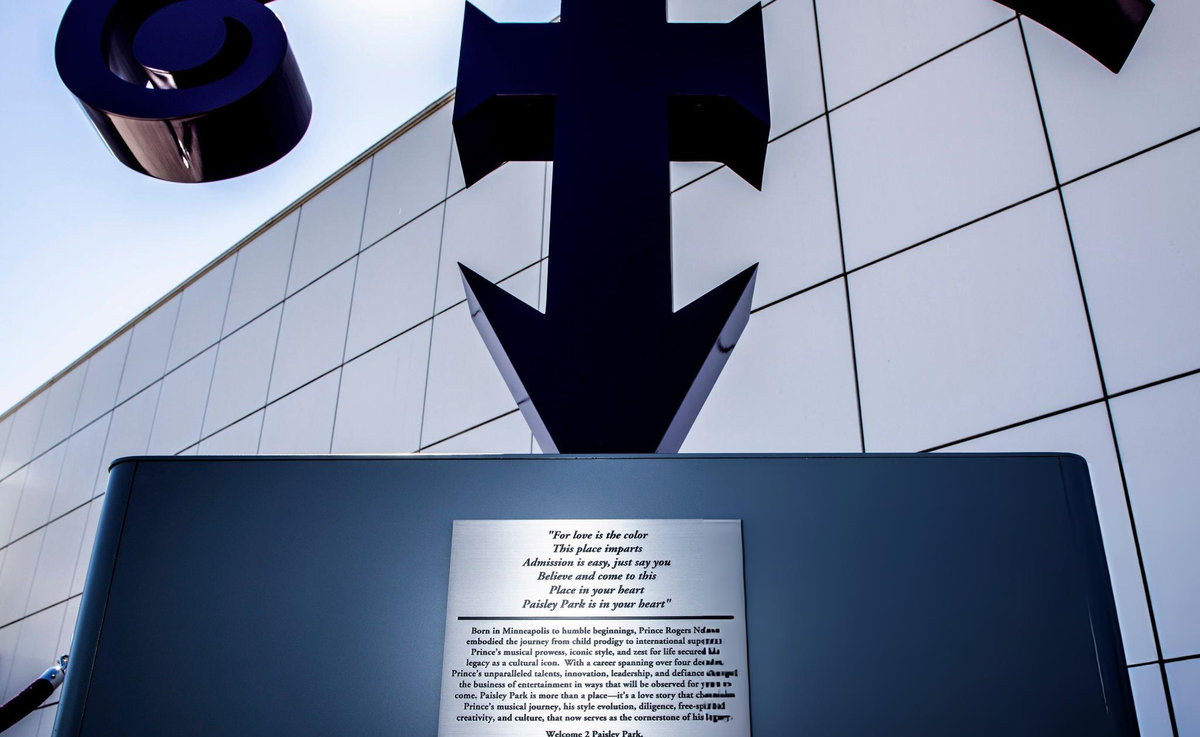
The symbol he had drawn on his thirty-fifth birthday to escape Warner Bros. now ornaments merchandise in high-street shops. He had spent two decades fighting for his masters. He won them back in 2014.
Two years later he was dead. Two years after that, his catalogue was signed back to a Warner Bros. affiliate.
He had said, once — in a post his estate still circulates: “So much has been written about me, and people don’t know what’s right and what’s wrong. I’d rather let them stay confused.”