At Cambridge University in 1963, colleagues witnessed something unusual about the 21-year-old physics student who had begun stumbling through corridors and slurring his words. While others discussed Stephen Hawking’s deteriorating condition with hushed sympathy, the young man himself displayed an almost disturbing indifference to his fate. He had just received a diagnosis of motor neurone disease with a prognosis of perhaps two years to live. Rather than despair, Hawking later admitted something that baffled those around him: “Before my condition was diagnosed, I had been very bored with life, there had not seemed to be anything worth doing.”
The terminal prognosis that would devastate most patients became his unlikely liberation. During his hospital stay, observing a boy dying of leukaemia in the adjacent bed provided brutal perspective on his own situation. A vivid dream of being executed crystallised his new outlook—there were still achievements within reach, whatever time remained. This paradoxical response to mortality would define not only his scientific approach but the complex personality that colleagues and family would experience as both inspiring and exhausting for the next five decades.
Jane Wilde, whom he met shortly after his diagnosis, witnessed the transformation from aimless undergraduate to fiercely determined researcher. Their engagement provided what he termed “something to live for,” yet this same intensity would later manifest as what Jane diplomatically described as “determination, some obstinacy”—traits that enabled extraordinary scientific work whilst placing enormous strain on those required to support it.
His physical decline forced an intellectual transformation that colleagues found both fascinating and unsettling. Unable to write equations, Hawking began constructing complete geometric visualisations of spacetime curvature, black hole mechanics, and quantum field interactions entirely within his mind. Laboratory sessions took on an unusual rhythm: students would write equations on blackboards whilst Hawking stared silently for long periods before either nodding agreement or suggesting the next analytical step.
Werner Israel, who collaborated with him during this period, compared the process to “Mozart composing an entire symphony in his head.” The constraint had eliminated what Hawking later recognised as advantageous clutter. “I was glad I remained a theorist,” he reflected, “because a theorist can conclude an argument quickly, while an experiment can take years.” His visualisation technique allowed him to “cut through the clutter that characterises theoretical physics and focus clearly on the essential points”—a method that bypassed conventional mathematical derivations through what appeared to colleagues as geometric intuition.
This cognitive adaptation produced his most famous discovery. In 1974, Hawking calculated that black holes emit radiation at temperatures inversely proportional to their mass, meaning they would slowly evaporate by converting swallowed matter and energy back into radiation. The prediction sparked fierce controversy within the physics community, with major figures “angrily disputing” what they considered “a mockery of the laws of physics.” His integration of quantum field theory, general relativity, and thermodynamics revealed what he described as a “profound and unexpected link between gravity and quantum theory.”
The discovery initially “annoyed” Hawking himself because it contradicted his assumptions about black holes being permanently black. Leonard Mlodinow later identified what distinguished Hawking from colleagues trapped in what he termed “frozen thinking”: “the great ability to embrace failure and then pivot in a new direction.” This intellectual flexibility, developed through years of adapting to physical constraints, enabled him to possess “the courage to discard cherished old ideas that are obstacles to progress.”
The breakthrough earned him election to the Royal Society at 32, establishing his reputation as a key theoretical physicist. Yet the same traits that enabled such scientific achievement created mounting domestic pressures that Jane documented with candour in her memoir.
The financial realities were substantial but rarely discussed publicly. Despite his academic prestige, Hawking’s Cambridge salary remained modest whilst the costs of his condition—specialised equipment, accessible housing modifications, and increasing care requirements—strained family resources. Jane worked to supplement their income whilst managing three children and Stephen’s escalating needs largely alone.
His refusal to acknowledge limitations extended beyond scientific work into domestic expectations. Jane observed that Stephen expected normal family life whilst requiring extraordinary accommodation—a contradiction that his fierce independence would not allow him to recognise. “His determination, some obstinacy” served theoretical physics brilliantly but translated into domestic inflexibility that placed crushing responsibility on his primary caregiver.
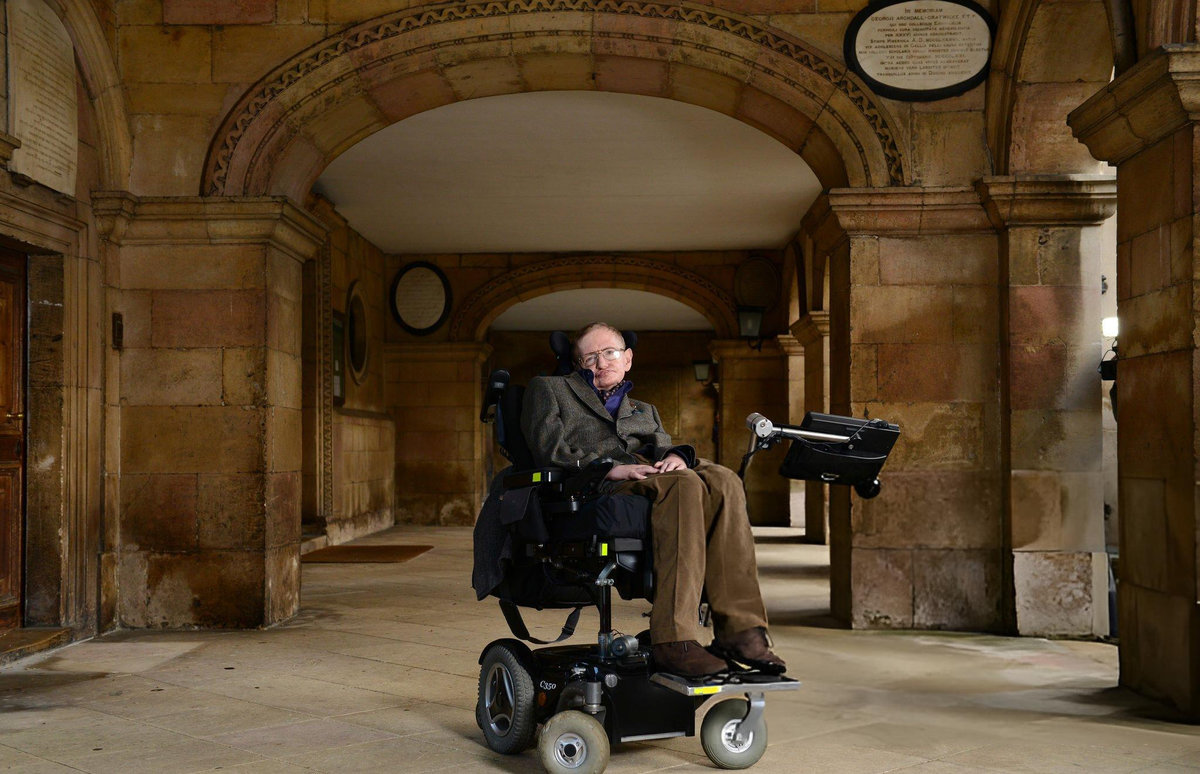
The 1985 pneumonia crisis that nearly killed him during a Geneva trip instead catalysed his transformation into global celebrity. When doctors advised discontinuing life support, Jane’s refusal led to an emergency tracheotomy that saved his life whilst permanently ending his natural speech. Hospital staff expected profound depression. Instead, they witnessed Hawking immediately collaborating with computer developers to design speech-generating technology.
Rather than the despair doctors expected, Hawking immediately began collaborating with computer developers to design more sophisticated speech-generating technology. The American-accented computer voice that initially seemed like devastating loss became the platform for unprecedented public reach. Hawking embraced the technology with characteristic determination, later working with Intel and SwiftKey to develop predictive software trained on his vast writings.
This communication innovation enabled A Brief History of Time, published in 1988, which became a global phenomenon with millions of copies sold and established Hawking as the world’s most recognisable scientist. Yet colleagues noted the tension between popular success and serious research. The demands of celebrity—television appearances, lectures, media interviews—consumed time that might have been devoted to theoretical work. Some peers questioned whether his public fame exceeded his scientific contributions, particularly as his later work became increasingly speculative and difficult to verify.
Hawking appeared to relish the celebrity, despite its complications. His appearances on The Simpsons, Star Trek, and numerous documentaries often displayed dry humour about his condition and reputation. The 2009 time traveller party—publicised only after the event—exemplified his approach to scientific inquiry through unconventional methods. “Nobody showed up,” he announced, declaring this “experimental evidence” that past travel remained impossible.
Yet those closest to him noted that the public persona—the cheerful, inspiring disabled scientist—differed markedly from private reality. The man who became a symbol of human triumph over adversity could be demanding and sometimes difficult, expecting others to accommodate his needs without complaint. His second marriage to nurse Elaine Mason in 1995, following his divorce from Jane after 26 years, proved equally complex. Friends and family reported concerns about Elaine’s controlling behaviour and Stephen’s increasing isolation from longstanding relationships, though rumours of abuse remained unconfirmed when the marriage ended in divorce 11 years later.
Hawking’s 2004 concession at a Dublin physics conference revealed perhaps his most admirable trait. For 23 years, he had maintained that information falling into black holes was irretrievably lost, violating fundamental quantum mechanics principles. Standing before colleagues including John Preskill, with whom he had wagered on the question, Hawking publicly admitted error: “This was my biggest blunder.” The intellectual courage required to abandon established positions reflected the same flexibility that had enabled his adaptation to physical constraints.
His death in 2018 prompted widespread tributes celebrating both his scientific contributions and personal courage. Yet assessment of his legacy remains contested across different communities. Within theoretical physics, his early work commands universal respect, but his later attempts at developing a “theory of everything” remain unproven and controversial. Family perspectives vary significantly—his children maintain largely positive public statements, but Jane’s memoir reveals the profound personal costs of supporting his single-minded pursuit of work and fame.
The public remembers Hawking as proof that physical limitations need not constrain human achievement. This narrative, whilst inspiring, simplifies a far more complex personality—someone whose determination to live normally despite progressive disease extracted significant costs from the relationships that made such determination possible. His transformation from disabled physicist to global icon demonstrates both the extraordinary potential of human adaptation and the contradictions inherent in remarkable lives that resist simple interpretation.