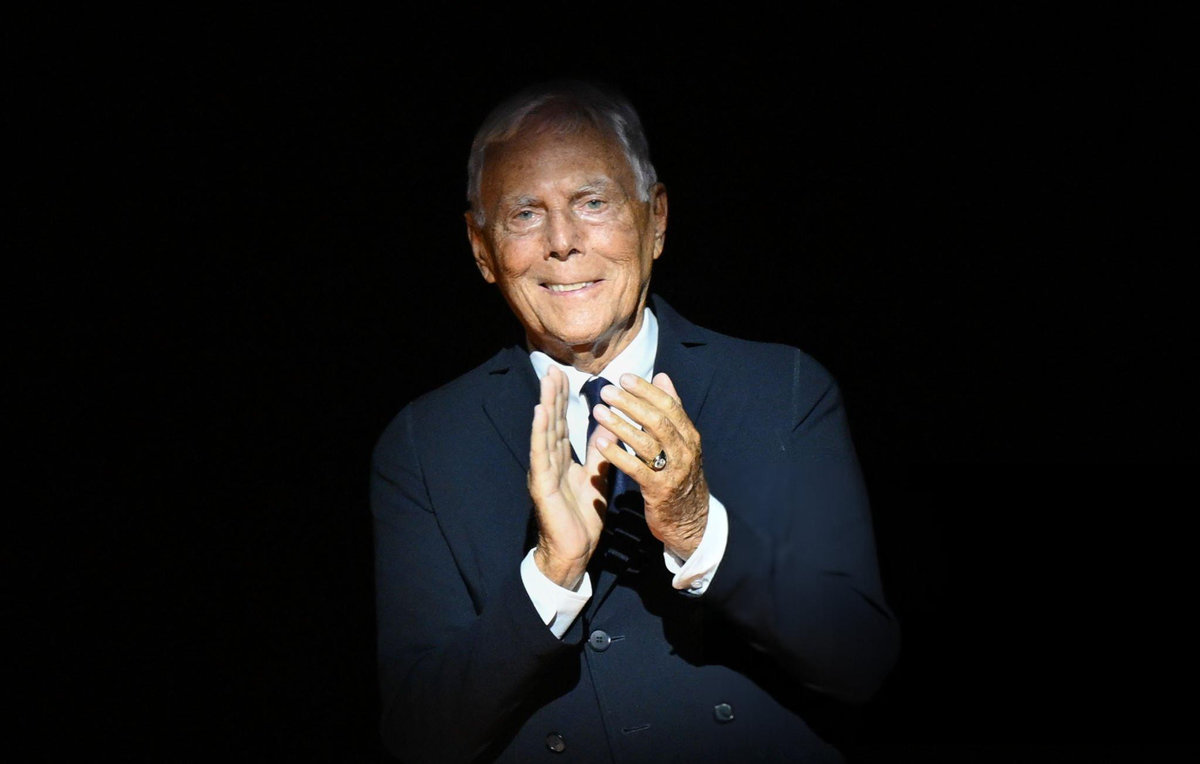
In August 2025, days before his death at 91, Giorgio Armani gave his final interview to The Financial Times. In this conversation, the fashion designer who had built a 2.3 billion euro empire made a surprising confession: “My only regret in life was spending too many hours working and not enough time with friends and family.” This confession came from someone who had described work very differently throughout his career. In his autobiography Per Amore, published in 2023, Armani wrote that work was “better than any hallucination or artificial high. It’s a kind of orgasm.”
My only regret in life was spending too many hours working and not enough time with friends and family.
— Giorgio Armani, Final Interview with The Financial Times, August 2025
Understanding these different feelings requires examining their origins in his family background, where Sister Rosanna Armani documented the psychological foundation of his drive. In her September 2025 essay “About Family” for 10+ Magazine, she explained: “In the Armani family, for example, we are all extreme perfectionists: we put everything into our work, and not allowing anything to slip through our fingers is a lesson we have been taught since childhood.”
Giorgio himself described the specific mechanism behind this education. “She was the one who pushed me to always do my best, and to continually move the goalposts that little bit further,” he said of his mother’s influence. Rosanna confirmed this created a permanent psychological state: “This hint of dissatisfaction is a spark that continues to pique me, even today,” explaining how this lifelong restlessness drove his work obsession.
This inherited drive was most evident in Armani’s approach to business. Throughout his career, he systematically refused opportunities that might dilute his authority. While competitors embraced public stock offerings and major fashion houses formed partnerships, Armani maintained complete ownership through complex foundation structures specifically designed to prevent external acquisition.
His early partnership with Sergio Galeotti revealed how this control operated in practice. Despite Galeotti having no business experience, Armani later admitted he and Galeotti “pushed the idea that Sergio was the big guy behind it all in this business. And I was the creator.” Yet he simultaneously acknowledged: “Naturally Sergio had no experience in business, and naturally behind Sergio there was me.”
Like his business relationships, this need for control was also evident in Armani’s most intimate partnership. His 47-year relationship with Leo Dell’Orco, which began in 1978, demonstrated how these ingrained standards created emotional distance even with his closest companion. Despite wearing Dell’Orco’s ring for decades and describing him as “the person closest to me,” Armani never used the word “love” to define their bond.
It’s pointless to be in love and give little space to your love, because I don’t have the space.
— Giorgio Armani, Interview with Corriere della Sera, 2024
In a 2024 interview with Corriere della Sera, Armani rationalised this emotional withholding: “It’s pointless to be in love and give little space to your love, because I don’t have the space.” Dell’Orco adapted to this situation, telling La Repubblica in 2023: “I’ve never tried to elbow my way to the front. I prefer to stay behind the scenes and give the important input from there.”
In his professional life, this demanding standard affected Armani’s work environment. Former staff testimonies from September 2025 revealed how his approach created both intense loyalty and considerable pressure. Multiple employees described him as “like a father to us,” expressing genuine admiration for his protective management style.
However, this paternal care came with demanding requirements. Colleagues consistently reported working under what they characterised as “microscopic attention to detail.” Former employees described how difficult it was to adapt to his uncompromising vision, requiring constant dedication to meet standards that far exceeded typical business demands.
Surprisingly, this same focus that created excellence in brand presentation led to significant oversight failures elsewhere. In 2025, Italian authorities discovered a striking discrepancy between Armani’s public ethical claims and actual supplier practices. The investigation that led to a €3.5 million fine found that external suppliers had “employed workers unlawfully and maintained substandard health and safety conditions” whilst the company simultaneously promoted its social responsibility credentials.
When confronted with these documented violations, the company responded with characteristic defensiveness, expressing “disappointment and bitterness” whilst contesting the decision and claiming they “operated with the utmost transparency.” This reaction demonstrated how Armani’s perfectionism, whilst creating excellence in visible areas, also generated an inability to acknowledge flaws when discovered.
Over the course of my life, I have sacrificed love, private life, and time for me, all on the altar of work.
— Giorgio Armani, Interview with The-Talks, 2020
Throughout his life, Armani possessed remarkable self-awareness about these costs whilst appearing unable to change course. In his 2020 interview with The-Talks, he acknowledged: “Over the course of my life, I have sacrificed love, private life, and time for me, all on the altar of work.” Yet he also described this drive as an “endless path of improvement” and consistently returned to the behaviours that created his isolation.
Armani’s life shows the documented costs of extraordinary achievement. His childhood programming created both the relentless standards that built a fashion empire and the emotional limitations that prevented him from fully enjoying the rewards. Different observers experienced different aspects of his character. Employees found demanding excellence paired with paternal care. Intimate partners encountered deep affection constrained by emotional guardedness. Regulatory authorities documented ethical blind spots in an otherwise meticulous operation. The fashion industry gained a revolutionary aesthetic vision whilst Armani himself remained trapped in the very perfectionism that made his success possible. He was aware of what he was sacrificing but unable to escape the psychological machinery that defined his existence.
Questions for Reflection
Does perfection perfect us, or perfect our loneliness?
Armani described his family’s training in “extreme perfectionism” where “not allowing anything to slip through our fingers is a lesson we have been taught since childhood.” This drive created what he called a “hint of dissatisfaction” that fueled his entire career. Yet his final confession revealed the cost: “My only regret in life was spending too many hours working and not enough time with friends and family.”
Can work ever fill the space left by love?
Armani described work as “better than any hallucination or artificial high—it’s a kind of orgasm,” treating his obsession as transcendent experience. He openly acknowledged he had “sacrificed love, private life, and time for me, all on the altar of work.” His dying words—expressing regret for choosing work over relationships—came from someone who had spent decades describing that same work as ecstasy.
Is control a strength, or does it eventually isolate us?
Throughout his career, Armani systematically refused partnerships and maintained complete ownership through complex structures designed to prevent external acquisition. Even with his closest companion of 47 years, Leo Dell’Orco, he never used the word “love,” explaining: “It’s pointless to be in love and give little space to your love, because I don’t have the space.” His need for control created both business success and emotional distance.
When does ambition become prison?
Armani possessed “remarkable self-awareness about these costs whilst appearing unable to change course,” repeatedly acknowledging the price of his drive in interviews spanning decades. He described his relentless pursuit as both an “endless path of improvement” and the source of his isolation. Yet he remained what observers called “trapped in the very perfectionism that made his success possible”—conscious of his cage but unable to escape it.