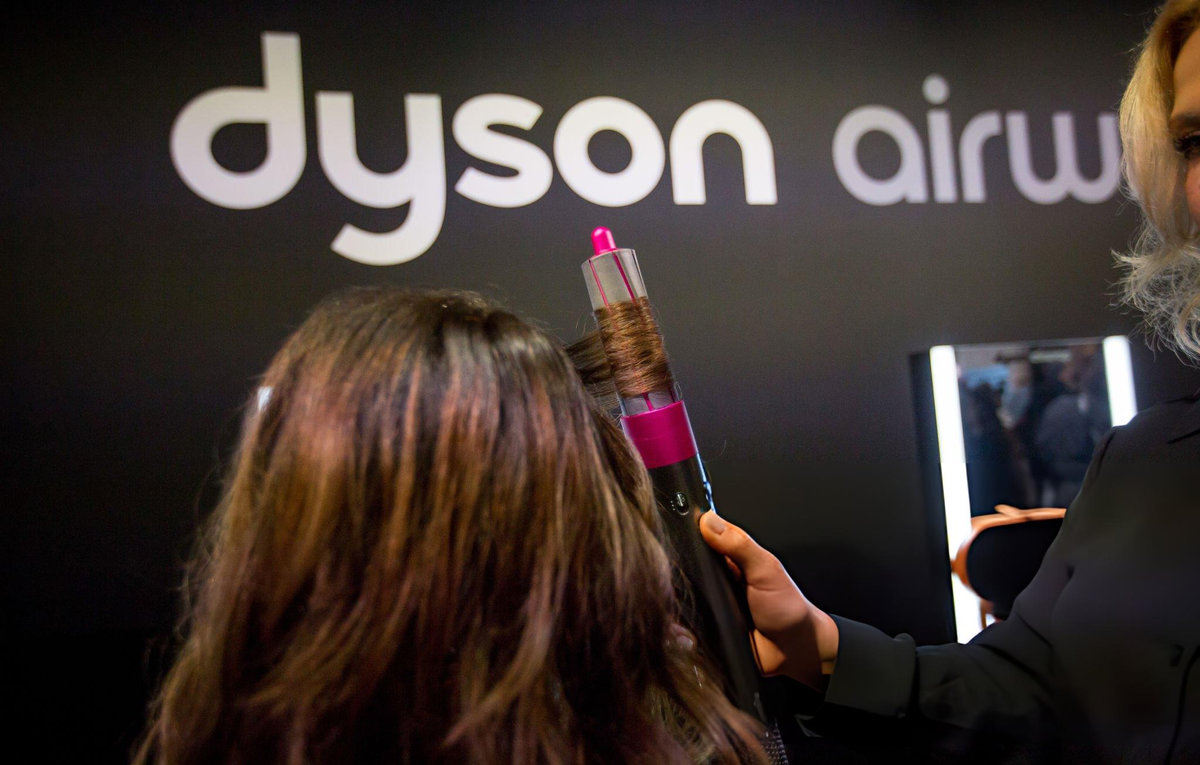
The Dyson Airwrap costs £479.99. The Shark FlexStyle does the same job for £299.99. Whoever picks up the Dyson first is paying for three words on the box: “No heat damage.”
Hair is not living tissue. Each strand is dead once it leaves the scalp, which means any damage done to it is permanent – there is no healing, only growing it out and starting again.
Each strand is wrapped in a layer of overlapping scales, like roof tiles. Heat lifts those scales. They crack. Once they are gone, the strand stays rough for good.
Most styling tools cause that damage directly by pressing hot metal onto the hair. A curling iron or straightener runs at 185–230°C. The heat is what forces the shape to hold. It is also what wears the hair down.
The Dyson does it differently. It is a wand with a barrel; switch it on and air spins around the barrel’s curved surface, catching damp hair and winding it on. No clamps. No metal touching the strand. That is the entire basis of the no-damage claim.
But hair does not need an iron’s temperatures to suffer. A 2011 study by the dermatologist Yoonhee Lee and colleagues at Yonsei University examined hair dried at a range of temperatures. Every heated method left surface damage on the cuticle, and the more heat used, the more damage appeared. Even gentle drying marked the hair. Heat and hair wear are not separable; they arrive together.
Free weekly newsletter
Get every new investigation directly in your inbox.
Science Checks and Brand Checks across the anti-ageing industry — delivered free.
What the Airwrap genuinely avoids is the worst kind of damage. Cosmetic chemist Michelle Wong, who writes as Lab Muffin Beauty Science, explains what happens when high heat hits wet hair: the water inside each strand turns to steam so fast it blasts its way out. “The water explosively evaporates, shattering whatever’s in its path, which happens to be your hair,” she writes. This bubble hair sets in above roughly 90°C. The Airwrap, capped at 150°C but drying slowly in moving air rather than searing wet hair against metal, largely sidesteps it. Gentler is not the same as none.
Dyson has been here before. The company has twice been ordered by Britain’s advertising regulator to drop performance claims it could not support. For “no heat damage”, it publishes no clinical trial. The claim simply sits on the box, unproven.
So is it worth £479.99? That depends on the hair on your own head.
Fine, fragile, colour-treated or already damaged hair earns its keep here. Swapping a 230°C iron for one capped at 150°C, used daily, is a real reprieve. In online reviews and forums, people with this hair type consistently describe less breakage over months of use. Thick, coarse or stubbornly straight hair gets the opposite deal. The same gentleness that protects fine hair is not hot enough to force a stubborn curl to hold, and it drops within the hour.
That is the problem with three words on a box. “No heat damage” is a single, flat promise made to every buyer – when the truth is conditional, and Dyson never states the condition. The tool damages less; it does not damage none. It suits one kind of hair and disappoints another. The claim says none of this, and the science it implies does not exist.