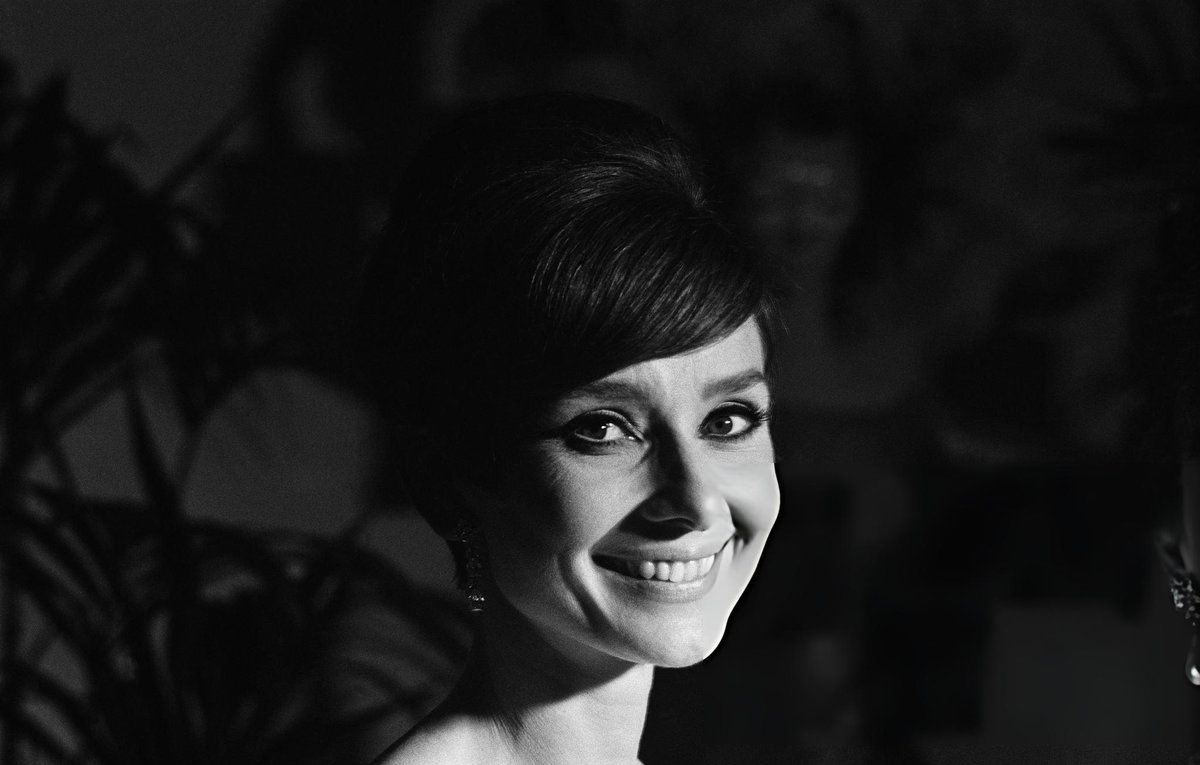
In 1978, Sean Hepburn Ferrer returned home to find his mother in bed, having taken what he later described as “a bunch of sleeping pills.” The woman the world knew as the epitome of grace and elegance looked at her 18-year-old son with what he remembered as “bloodshot eyes” and revealed the harsh truths about his stepfather Andrea Dotti’s infidelities. This moment revealed the profound contradiction that defined Audrey Hepburn’s existence: a global icon of poise who privately battled devastating insecurity.
The best-kept secret about Audrey was that she was sad.
— Emma Ferrer (Audrey Hepburn’s granddaughter), quoting Sean Hepburn Ferrer
Sean later recounted how his mother shared details about Dotti’s betrayals that no child should hear. Italian paparazzi had documented Dotti’s affairs with over 200 women, and Sean observed that his stepfather had “killed the marriage every day for ten years.” The incident revealed how Hepburn’s public persona of unshakeable composure masked a woman “completely devastated by this betrayal,” as Sean described it.
Hepburn’s colleagues consistently documented her exceptional professionalism alongside her paralysing self-doubt. Director Fred Zinnemann called her “unquestionably the nicest and most talented girl in the business” and noted she showed “the greatest consideration for her co-workers.” Industry professionals reported she was “always the first one on the set, always on time, and never made anybody wait, consistently saying thank you.”
Yet this same woman, described by some as having “unmatched beauty and elegance,” never considered herself attractive. Sean confirmed that his mother was “basically a very insecure person whose very insecurity made everyone fall in love with her.” He described her as “a star who couldn’t see her own light.” An academic analysis by Ian Jarvie noted “the bewildering contradictions” in her character, contrasting her on-screen “cool, humour and imperturbability” with off-screen “suggestions of imperiousness, nerves, hysteria.”
Co-star Cary Grant observed this duality directly, stating that “in spite of her fragile appearance, she’s like steel.” Her son confirmed this assessment, noting that “ballet dancers are tough people, never forget that.” This strength emerged from surviving severe malnutrition during Nazi occupation, surviving partially on tulip bulbs between ages 9 and 16.
Her family’s background complicated this suffering. Both parents had been early supporters of fascism. Her mother had met Adolf Hitler and written favourably about him. Her father remained deeply involved in fascist activity even after abandoning the family. Yet Hepburn experienced the same civilian starvation as other Dutch citizens. This occurred during the brutal “Hunger Winter” of 1944-1945, when Nazi forces blocked food supplies to punish resistance activities. The physical strain permanently weakened her, forcing her to abandon her dream of becoming a ballet prodigy and “re-invent herself” as an actress.
My father’s disappearing act was ‘the most traumatic event of my life.’
— Audrey Hepburn
Hepburn’s romantic relationships revealed a consistent pattern rooted in childhood abandonment. Her father’s departure when she was six remained, in her words, “the most traumatic event of my life.” She confessed, “I loved my father more than any other man in my entire life.” Sean later observed that his mother seemed to seek someone “almost more a father than a husband” in her relationships. This emotional scar left her “insecure—perhaps for life,” as she admitted.
This dynamic shaped both her marriages. Her first husband, the actor Mel Ferrer, whom she married in 1954, was perceived by colleagues as “too controlling” and manipulative. Colleagues felt he was using her success to advance his own career. Sean confirmed his father was a “difficult and demanding man” who “regretted every day for the rest of his life having lost that relationship.” The marriage lasted 14 years despite these tensions, ending when Hepburn “deserted Hollywood” in 1967 to focus on motherhood.
The marriage to the psychiatrist Andrea Dotti proved to be even more destructive. Sean documented how Dotti’s “terrifying duality” and serial adultery left his mother “destroyed.” The psychological toll was evident when Hepburn took sleeping pills during the marriage’s collapse. Sean described finding her in this condition and having to hear details no child should know. He realised that his mother was faced with the choice to either “stay in bed and cry herself to sleep every day, or get on with it.”
Her younger son, Luca Dotti, experienced the aftermath differently. Born in 1970 during the second marriage, he witnessed the divorce proceedings and later collaborated on “Audrey at Home: Memories of My Mother’s Kitchen.” After the separation, Hepburn remained in Italy so that Luca could maintain contact with his father. However, Sean noted that Dotti “never made use of his visitation rights.” The decision to stay demonstrated how Hepburn’s abandonment issues influenced her parenting choices, ensuring her children would not experience similar rejection.
Hepburn’s career decisions defied Hollywood logic. She explicitly stated she “never accepted a picture purely for the money” but chose roles based on whether she “just liked it or it doesn’t strike me as anything I particularly would like to do.” She explained this approach by acknowledging she lacked “a great deal of knowledge and experience” about the film industry. She preferred following her emotional instincts rather than strategic calculations. This instinct-driven approach led her to abandon acting at its peak to focus on motherhood. She was determined to provide her sons with a “non-Hollywood” upbringing in a farmhouse.
I myself was born with an enormous need for affection, and a terrible need to give it.
— Audrey Hepburn, from “Enchantment” by Donald Spoto
Sean estimated that her professional success “would have continued at a high level for many years” had she maintained her career. Instead, she prioritised what she called an “enormous need for affection, and a terrible need to give it,” channelling this drive into intensive mothering. Her son confirmed she set “high standards” and possessed “tremendous inner strength” that allowed her to “pick herself up” after setbacks.
The assessment of Hepburn’s acting ability remains controversial among critics and biographers. Director Fred Zinnemann praised her as “a great actress in a very difficult and exacting part” for The Nun’s Story. However, some observers argued her acting was “often too dramatic or too giddy” and that “most of the time she is just cute.” One critic concluded her emotions felt “fake and acted,” deeming her “not a believable actress.”
Biographer Barry Paris attempted to provide balance by deliberately seeking examples of Hepburn being “mean,” though he ultimately concluded she was genuinely kind. Critics noted this approach revealed his sensationalistic agenda rather than genuine character flaws. Conversely, her son Sean’s biographical work has been criticised for being “too kind to her” due to his evident affection and possible lack of objectivity.
Both Sean and Luca now manage her extensive posthumous legacy, including trademark protection of her image in every global jurisdiction. They pursue “two to three dozen lawsuits every year” against unauthorised usage, whilst maintaining charitable work through the Audrey Hepburn Children’s Fund. Sean served as chairman until 2012, when he turned the position over to his half-brother, Luca. Legal disputes between the brothers over estate management continue to reveal complex family dynamics. Sean became involved in litigation against the charity he founded over the right to use his mother’s name and likeness.
Giving is living. If you stop wanting to give, there’s nothing more to live for.
— Audrey Hepburn
Audrey Hepburn reveals persistent contradictions that resist simple explanation. The woman who took sleeping pills during emotional crisis maintained flawless professional discipline throughout her career. The insecure performer who never considered herself beautiful became a global icon of elegance. The traumatised child who survived wartime starvation abandoned her career at its peak to ensure her children’s stability. Audrey Hepburn could not see her own light but continues to illuminate others decades after her death.