
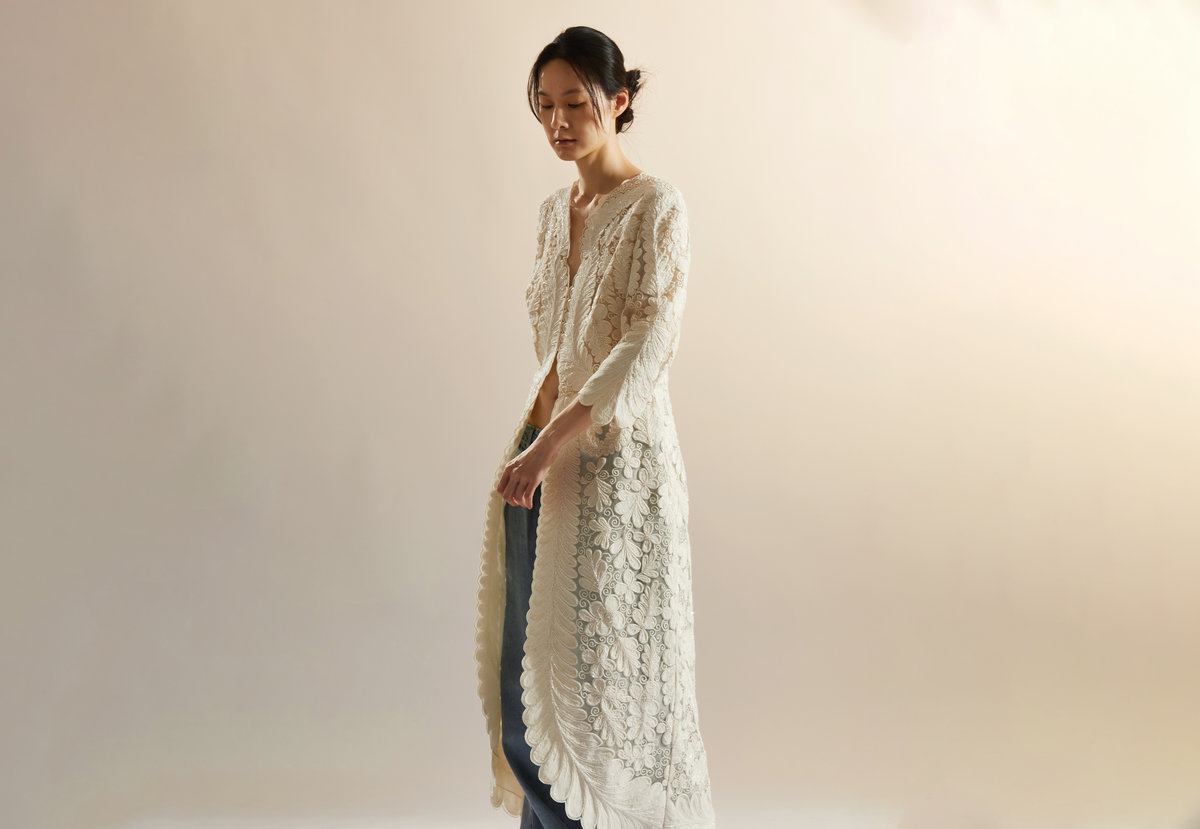
Wei i Hsieh’s Breaking Free translates the experience of long-term psychological constraint into structural form. Through constricted silhouettes, metal perforations, diverted embroidery lines, and lace repurposed as internal scaffolding, the collection negotiates a continuous tension between compression and release. Rather than proposing resolution, the work preserves the body’s hesitations — rendering emotional states not as statements, but as conditions embedded within the fabric itself.
Within the context of modern fashion, collections with genuine conceptual depth often choose to occupy a state of mind that remains unresolved. Wei i Hsieh’s Breaking Free develops this premise. The collection originates from an internal experience of long-term compression and constraint. These sensations are never explicitly articulated, but are instead progressively embedded within the garment’s structure, proportions, and material relationships, allowing emotion to manifest through the body.
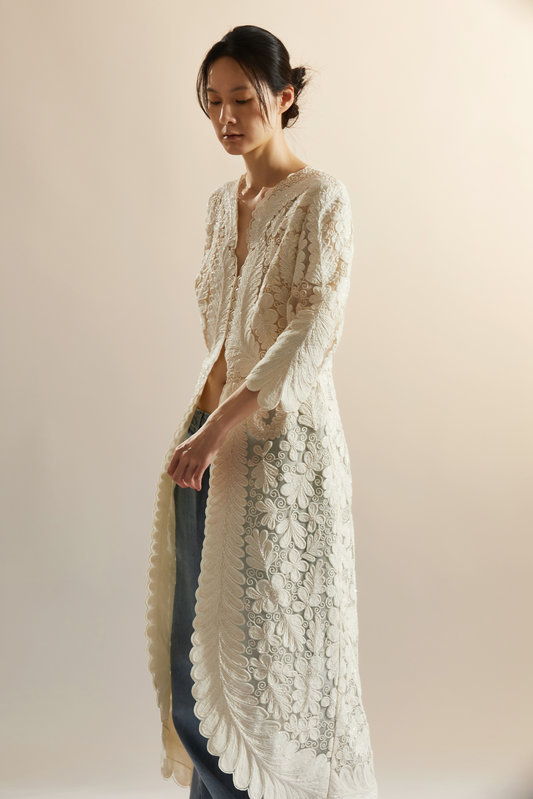
The entire collection revolves around a sensation of bodily confinement. Constricted shoulders, controlled waistlines, and inward-folding sleeve shapes collectively shape a silhouette under constant tension, as if the body itself were perpetually under strain. Scattered across the garments’ surfaces, these metal perforations appear subtle on the surface, but play a significant structural role. They open the fabric in specific areas, allowing air to circulate and granting the bound body momentary respite. The distribution of openings serves as a form of rhythmic control, subtly but persistently influencing the wearer’s bodily experience.

Embroidery emerges as another central emotional thread within the collection. Wei i Hsieh uses familiar stitches and lines, guiding them off their predetermined paths. Through repeated layering and shifts, the lines gradually lose their original order, forming incomplete wing-like shapes. These embroideries do away with clear symbolism, instead resembling traces of emotion lingering on the surface. Through changes in density and layered overlays, the garment’s surface gains a textural quality approaching relief, maintaining a tension within the stillness of the overall aesthetic.
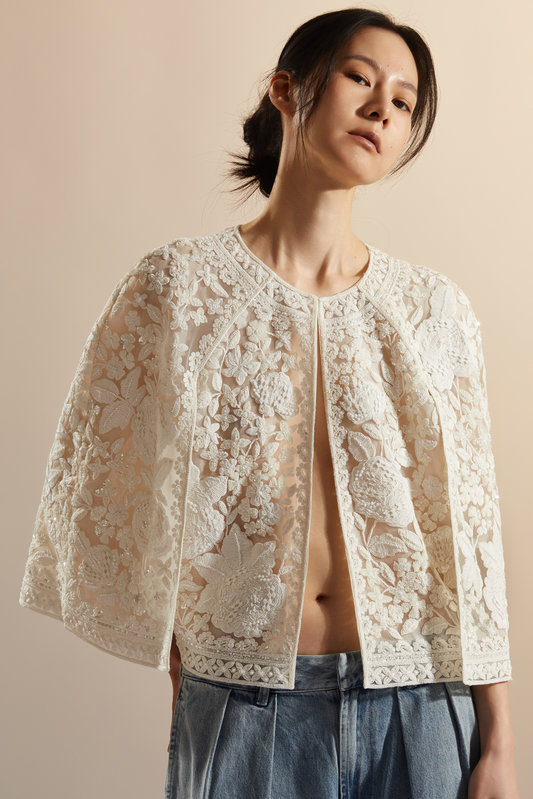
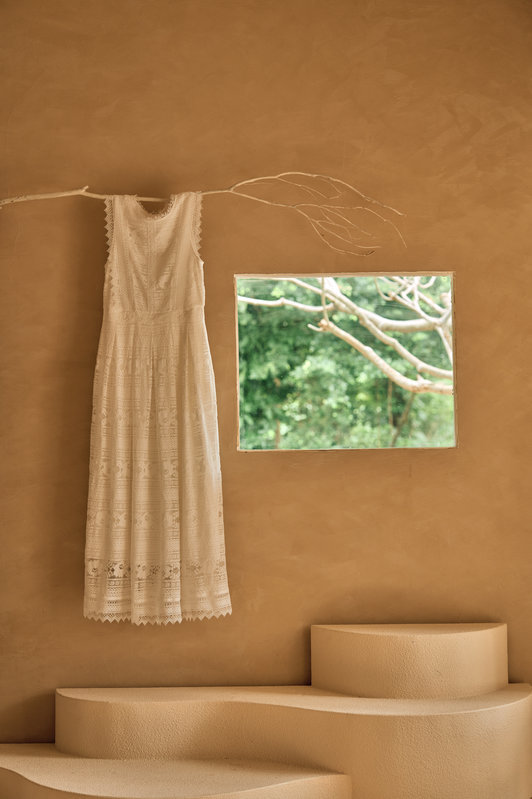
As the structure loosens, lace intervenes, becoming a new form of support. Delicate lace is layered, cut, and sewn repeatedly, forming a soft, self-contained structural network within the garments. This extends the body’s lines while adding visual depth and openness. In this context, lace functions more like a developing fabric, filling the voids created by structural release and forming a subtle tension with the metal buttonholes and embroidered lines.
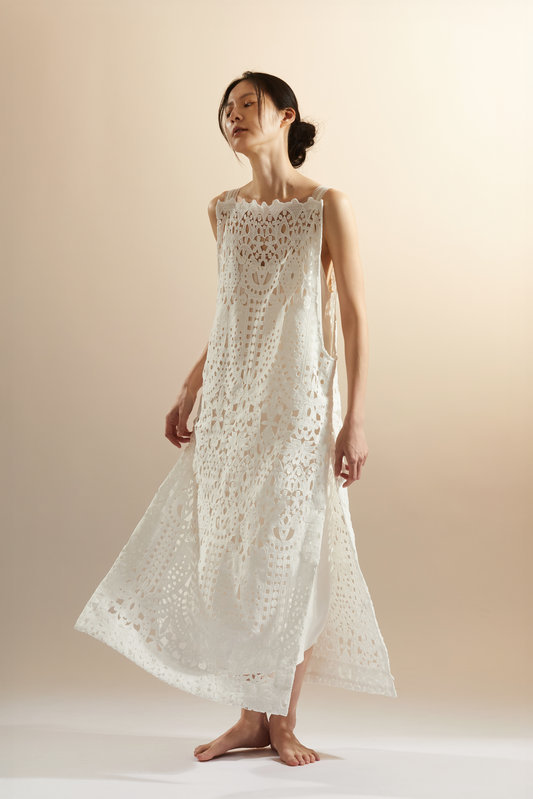
In its treatment of fabrics and tailoring, Breaking Free remains centred on the relationship between tension and release. Stiff materials alternate with soft fabrics, heavy cotton layers intertwine with lightweight mesh, allowing the body to remain enveloped without sacrificing freedom of movement. Expanded shoulders, emphasised waistlines, and off-centre hems and cuffs create an ever-shifting silhouette.
In Breaking Free, Wei i Hsieh focuses attention on those almost indiscernible shifts between the physical and psychological. The work refrains from offering definitive conclusions about ‘liberation’, instead preserving traces of hesitation, pause, and repetition. It is from this state of openness that the design derives its power.