
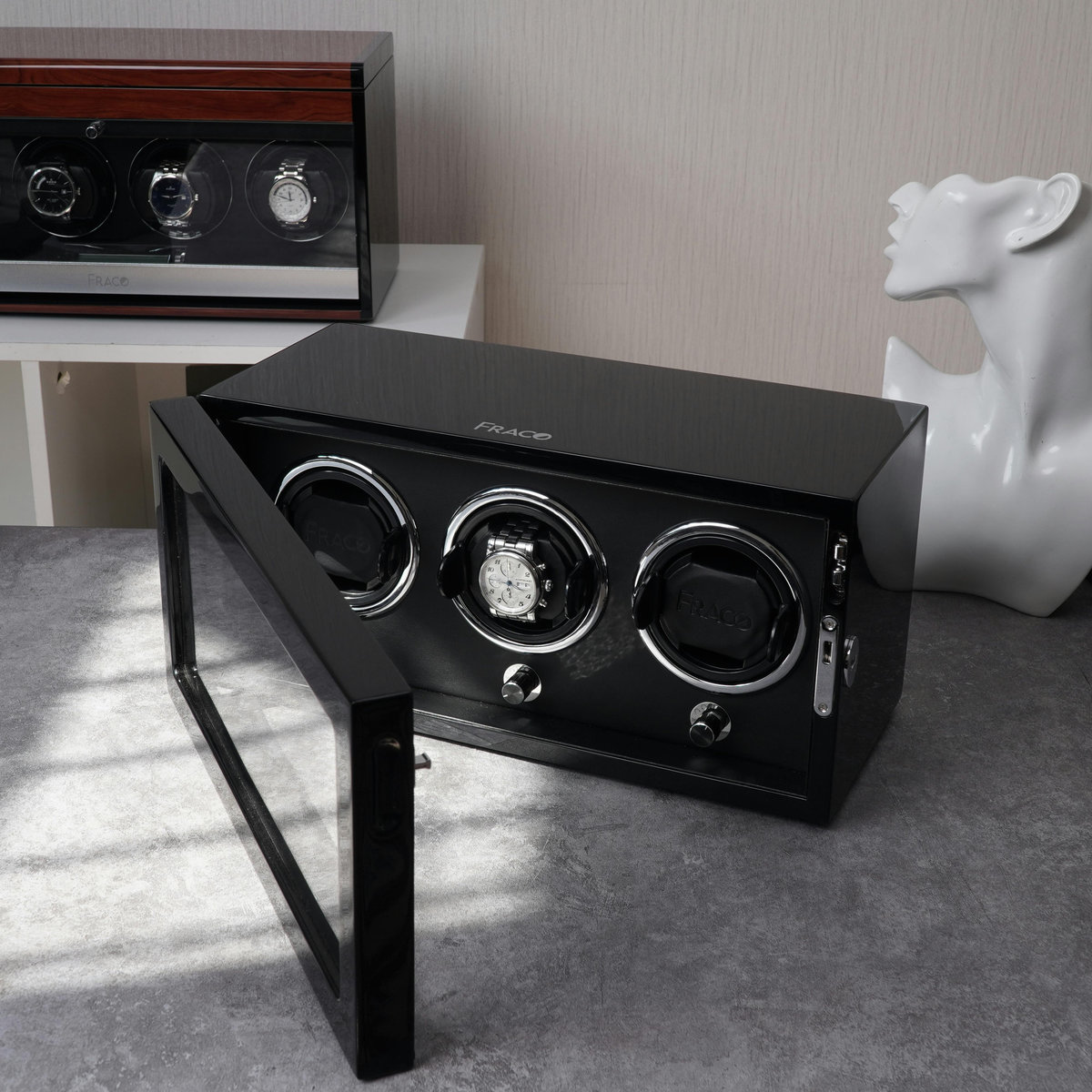
Climate, Craft, and the Question of Mechanical Care
Among Australian watch collectors, few accessories inspire as much quiet debate as the automatic watch winder. Once considered a niche item reserved for large collections or high-complication timepieces, the watch winder has increasingly entered conversations about climate, mechanical longevity, and modern collecting habits in Australia.
At the centre of the discussion lies a simple tension: automatic watches are designed to stop, yet many collectors prefer to keep them running. Whether this preference is practical, cultural, or environmental is where the debate becomes interesting.
Mechanical Watches and the Nature of Intermittent Use
Automatic watches operate through a self-winding rotor that converts wrist motion into stored energy. Most modern movements offer power reserves between 38 and 72 hours. When left unworn beyond that window, the watch stops—requiring resetting of time, date, and any additional complications.
From a purely mechanical standpoint, this behaviour is expected and not inherently harmful. The British Horological Institute (BHI) has long noted that modern mechanical movements are engineered to tolerate periods of rest when properly serviced and stored, as outlined in its technical guidance on movement care and lubrication principles.
The question, therefore, is less about mechanical risk and more about patterns of ownership and use.
Australian collectors, in particular, tend to rotate watches frequently—moving between professional, sport, and leisure pieces—resulting in longer inactive periods across multiple watches.
Climate as a Silent Variable in Watch Care
Australia’s climate introduces a factor often underrepresented in global watch discussions. Coastal humidity, higher average temperatures, and seasonal fluctuations can influence long-term storage conditions, particularly in homes without climate-controlled interiors.
Research from CSIRO on material preservation highlights how humidity can accelerate lubricant migration and degradation in precision instruments. While mechanical watches are sealed systems, extended inactivity may allow oils to settle unevenly over time—an effect more pronounced in warm, humid environments common across much of Australia.
For some collectors, controlled rotation via a properly configured watch winder is viewed as a preventative habit—less about keeping time accurate, and more about maintaining internal consistency during periods of non-use.
Complications, Convenience, and Handling
The debate becomes more nuanced when complications are involved. Watches featuring annual calendars, perpetual calendars, moonphases, or multiple time zones require precise adjustment sequences.
In its official ownership guidance, Rolex acknowledges that while stopping is normal for mechanical watches, calendar mechanisms should be adjusted only within recommended time windows to avoid unnecessary stress on components.
From this perspective, maintaining power through gentle, periodic motion can reduce repeated crown manipulation—particularly relevant for watches with screw-down crowns and complex mechanisms.
Here, the watch winder is framed less as a necessity and more as a tool of handling moderation.
The Cultural Shift Toward Structured Watch Care
Beyond mechanics, watch winders increasingly reflect a broader cultural shift in collecting. Australian enthusiasts are moving toward more structured watch care practices that include dedicated storage, humidity awareness, and intentional rotation.
Trade publications such as Hodinkee and WatchTime have observed this global evolution, noting that winders are now used selectively rather than continuously. In Australia, this trend is mirrored by specialist retailers such as Lux Watch Care, which focus on purpose-built storage solutions rather than purely decorative accessories.
In this context, the watch winder becomes part of a broader care ecosystem rather than a standalone luxury object.
Common Misconceptions Within the Debate
Several misconceptions continue to circulate:
“Watch winders overwork movements.”
Modern winders with programmable turns-per-day and rest cycles operate well within normal wear parameters.
“Manufacturers discourage winders.”
Most major brands neither explicitly recommend nor oppose their use, provided settings align with movement specifications.
“Only high-value watches justify winders.”
Rotation frequency and complication level are more influential factors than price alone.
As with many horological discussions, nuance matters more than absolutes.
Collector Trends in Australia
A hybrid approach has become increasingly common among Australian collectors. Watches worn daily are typically left off winders, while rotational or complication-heavy pieces are placed on controlled cycles. This balance reflects a pragmatic mindset rather than ideological adherence.
The result is selective adoption, signalling a more considered and mature collecting culture.
An Ongoing Conversation, Not a Verdict
Ultimately, the watch winder debate in Australia reflects broader themes within modern watch ownership: environmental awareness, mechanical respect, and personal usage habits. Winders are neither essential nor excessive; their relevance is contextual, shaped by climate, collection size, and individual preference.
As Australian collectors continue refining how they live with mechanical watches, the watch winder remains less a product category and more a subject of thoughtful discussion—one that sits at the intersection of engineering, environment, and culture.