
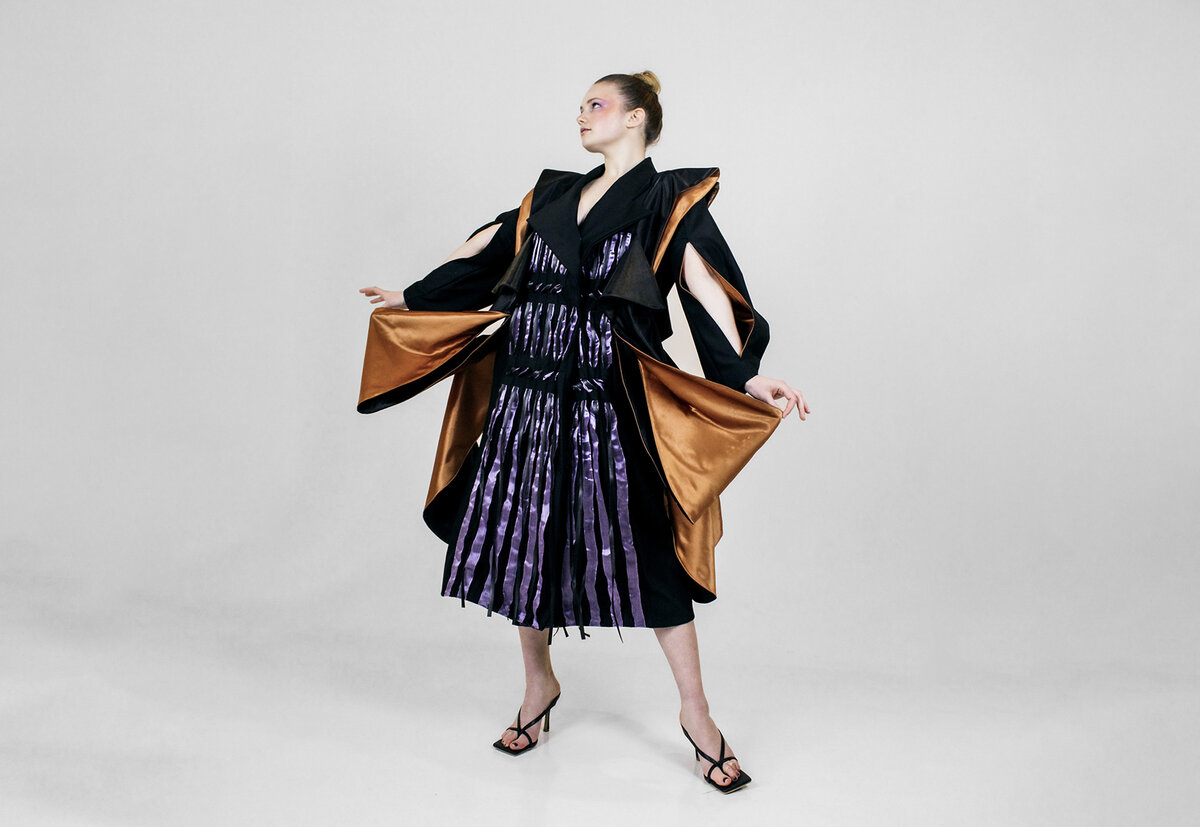
Yuchen Liu’s womenswear collection turns the mother-daughter bond into a structural design language — drawing on Japanese armour and Judy Chicago in equal measure.
In the womenswear collection Mother’s Daughter, intimate relationships are transformed into a clear and consistent design thread. Designer Yuchen Liu takes the intimate and complex psychological dynamics of the mother-daughter relationship as her creative starting point. Drawing on a female perspective, she uses the language of fashion to rethink the subtle relationships between identity, attachment and independence.
The initial concept for the Mother’s Daughter collection emerged from a bodily memory. Yuchen Liu secured two garments together on a mannequin, using an embracing posture as the starting point for her stylistic experiment. This approach creates a structural interplay between the garments, as if two bodies were constantly adjusting their distance between closeness and separation. Soft silhouettes and naturally draping fabrics further intensify this emotional atmosphere, allowing the garments to maintain an intimate sense of envelopment while leaving space for the body to breathe and move.
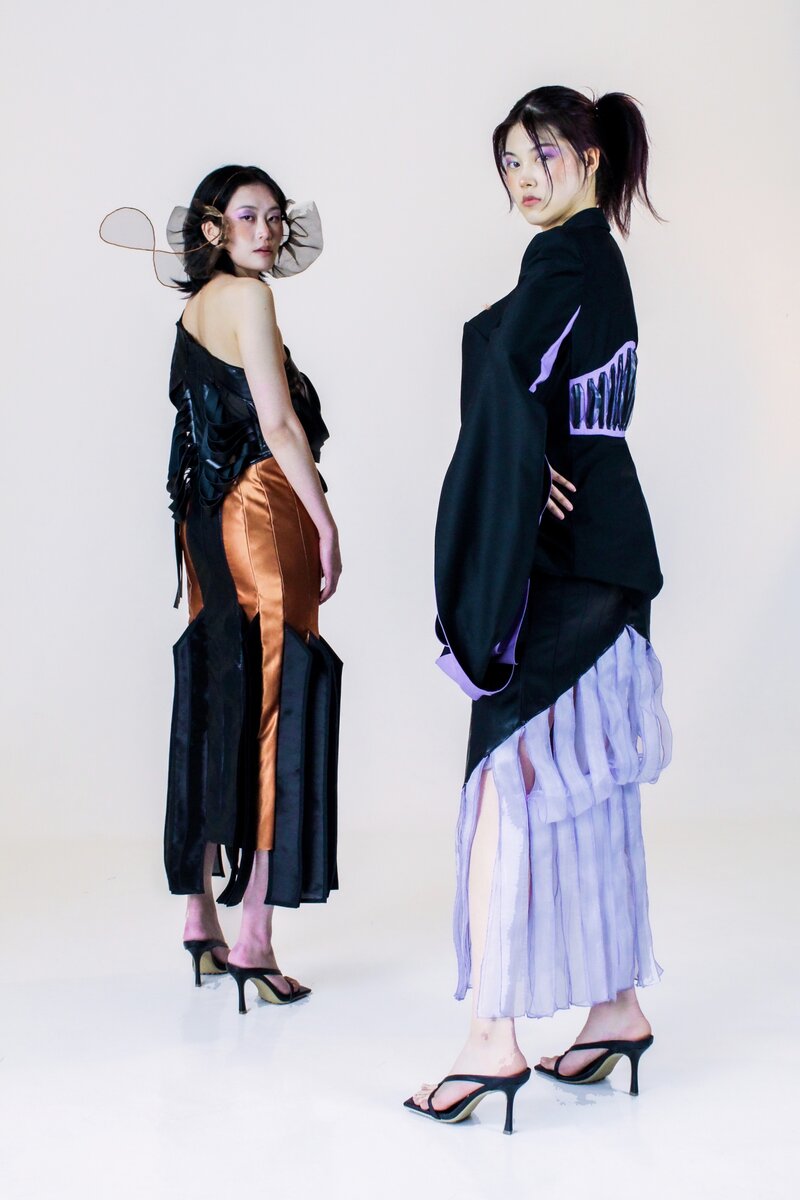
For the visual language, Yuchen Liu drew inspiration from the structural principles of Japanese samurai armour, transforming traditional layered construction into a softer, textile-based expression. Strap-like structures and cotton fabric intertwine across the garments’ surfaces, creating rhythmic layers. These elements function both as bonds connecting the body and as symbols of the indissoluble emotional ties within the mother-daughter relationship.
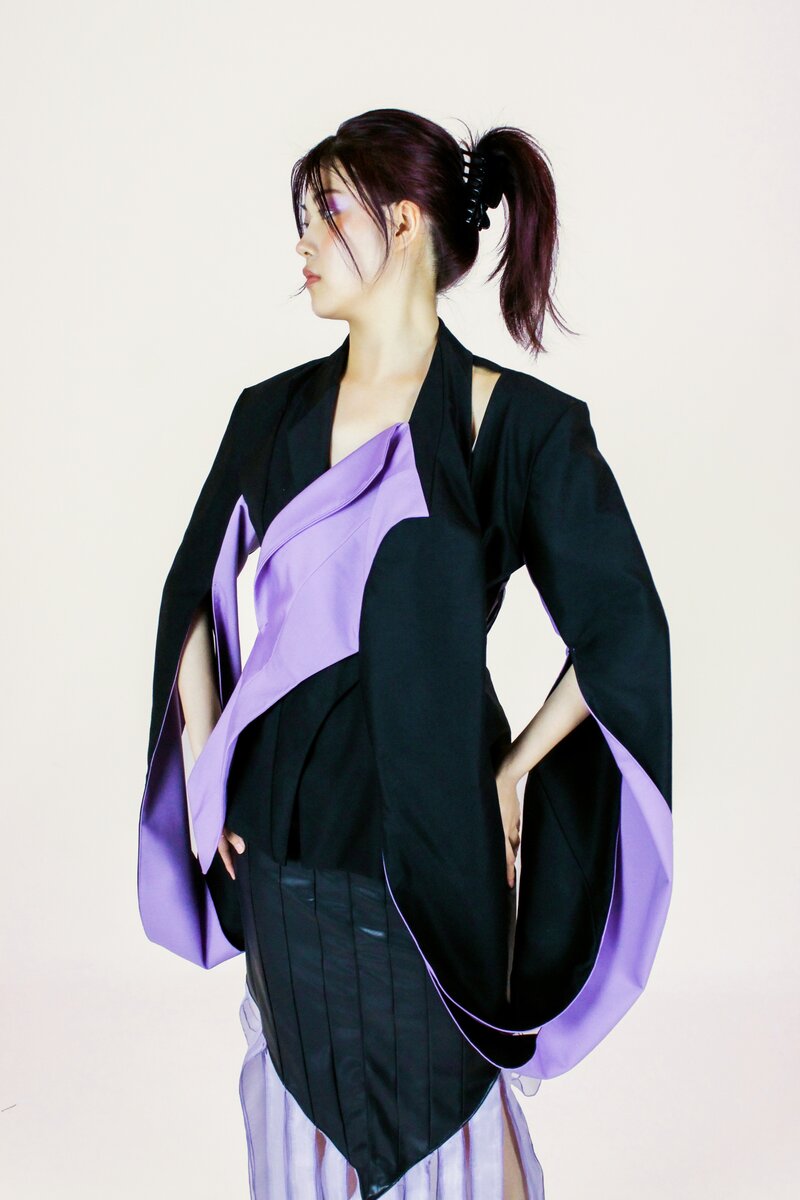
The female body and imagery of fertility also run throughout the collection. Drawing inspiration from Judy Chicago’s early feminist art, Yuchen Liu transforms abstract symbolic forms into textile manipulations and decorative structures. Ribbons, strips of fabric and hand-sewn details form organic curves on the surface of the garments, allowing the body to become a constantly evolving form. Through these delicate handcrafted treatments, the garments embody a femininity that is both soft and powerful.

Handcrafting holds particular significance in this collection. The slow, manual process allows materials to acquire richer layers, partly reconstructing the relationship between human and material. For Yuchen Liu, this investment of time is itself an emotional expression. Once completed, the garments are less objects to be consumed and more a medium connecting the maker, the wearer, and emotional memories.
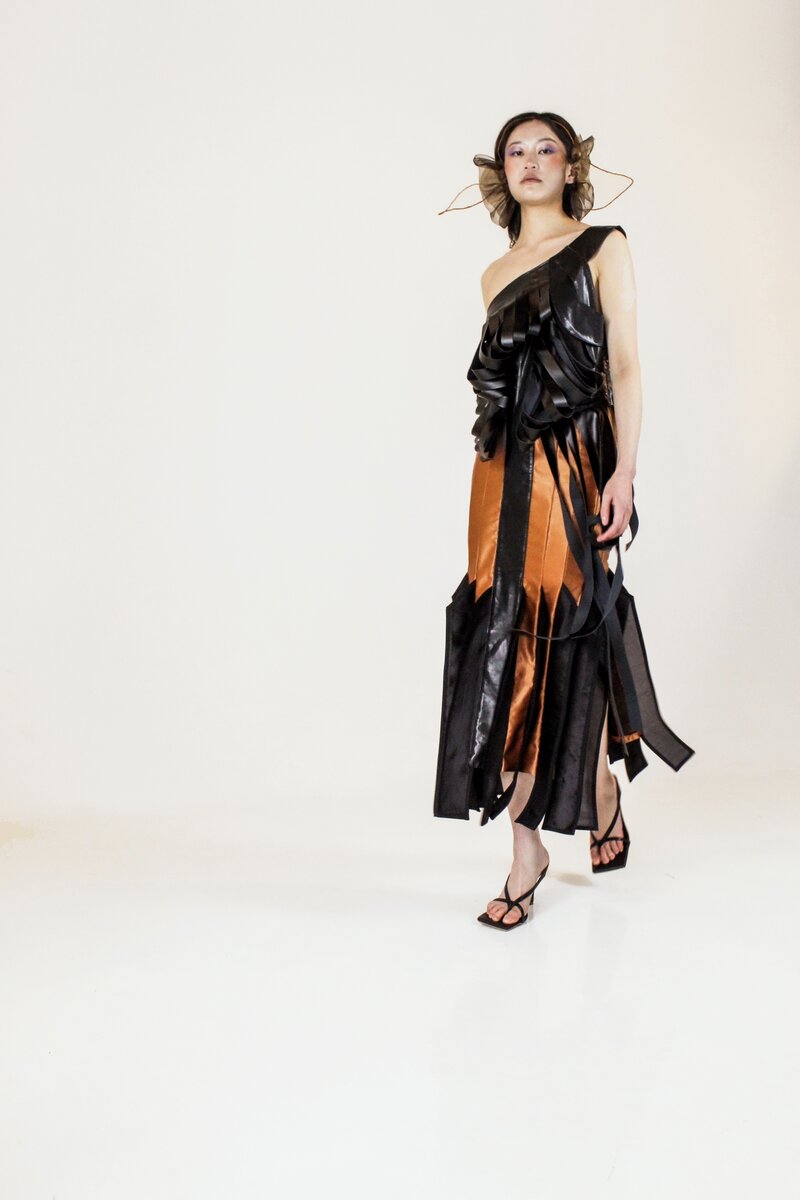
Mother’s Daughter presents a gentle feminine narrative. It does away with simplistic notions of dependency within the mother-daughter relationship, without equating independence with a complete severance of ties. Yuchen Liu prefers to use her garments to pose a question: when women are able to exist as whole individuals, can the love between mother and daughter continue in a freer form? This exploration of balance between intimacy and independence reveals, beneath the collection’s soft exterior, a clear and resolute sense of feminine consciousness.