
Editor’s note: This article, originally written by Lucille Smithson, has been revised and updated by our editorial team to include new information and insights.
In my local art shop there is a variety of oil paints to suit an array of abilities and budgets. There are student quality and mid range paints, and those aimed at professional artists. Then there is a section called Michael Harding Handmade Artist’s Oil Colours. “What are these?” I ask the sales assistant when I decide to switch from acrylic to oil paints. “Oh those are lovely, but pricey,” she says. “It’s something to do with the pigments he uses.” In my art school people are talking about buying a single tube of Michael Harding paint and about the wonderful depth of the colours.
I struggle to understand the hype, and then I see a portrait artist (whose work I greatly admire) post a photo of Michael Harding paints on Instagram. “Oh, so he uses them,” I think to myself, “I wonder if that gives him an edge?” I start to compare Michael Harding paints to other premium brands like Old Holland and Blockx. While these brands also offer high-quality pigments and smooth consistency, Michael Harding’s paints stand out for their unique shades and high pigment load, albeit at a slightly higher price point.
How Did Michael Harding Start Making Colours?
I contacted Michael Harding for an interview, which takes some doing given he is constantly travelling. During our hour-long conversation, there are a series of anecdotes some of which include Lucian Freud and David Hockney. Michael is a skilled spokesman and raconteur, and while we talk, he walks around his Boston home holding his laptop up so I can see his art collection. It is a fun and enriching conversation that goes beyond sales talk to discussions about art and what it means to be an artist.
“So what’s so special about your paints?” I ask, “Is it the ingredients?” Michael says it is more a case of what he is not putting in them, namely fillers, extenders and something called siccatives. These are the bulking and drying agents that result in muddiness when mixing or working wet into wet. “Things that mute or disrupt the colour” he says.
Michael, who considers himself a master paint maker first and figurative artist second, started making oil paints in his London flat in 1982. Frustrated with his art, he tried to understand what constituted truly great work. “I’d look at Old Master paintings in the National Gallery in London,” he recounts, “and think, OK, he’s got genius and he’s got skills that I don’t have, but it’s like he’s working with a completely different box of tricks. What’s going on here?”
The commercial paints he was using at the time felt limiting. “I found that I was struggling with the material – pushing it around,” he recalls. “Sometimes it would go off into a grey, stodgy mess – mud. Other times I’d get lucky and was able to put that brush stroke on the canvas that I’d envisaged. Once you start struggling with the material, it just makes things so much harder. Painting and drawing are already hard enough as it is,” he says emphatically.
What Sets Michael Harding Paints Apart?
To understand how the Old Masters created their beautiful hand-made paints that continue to maintain their brilliance through the decades, Michael consulted the technical bulletins available in the National Gallery in addition to historical books.
“These texts are designed for either aficionados of art materials or conservators,” he says, “but if you read between the lines, you can find information about what the ingredients of the paint were, and weren’t more importantly.” Almost immediately Michael started supplying the Royal College of Art and the Victoria and Albert Museum, and as word spread there was a demand for his paints.
Why Are Michael Harding’ Colours the First Choice for Acclaimed Artists?
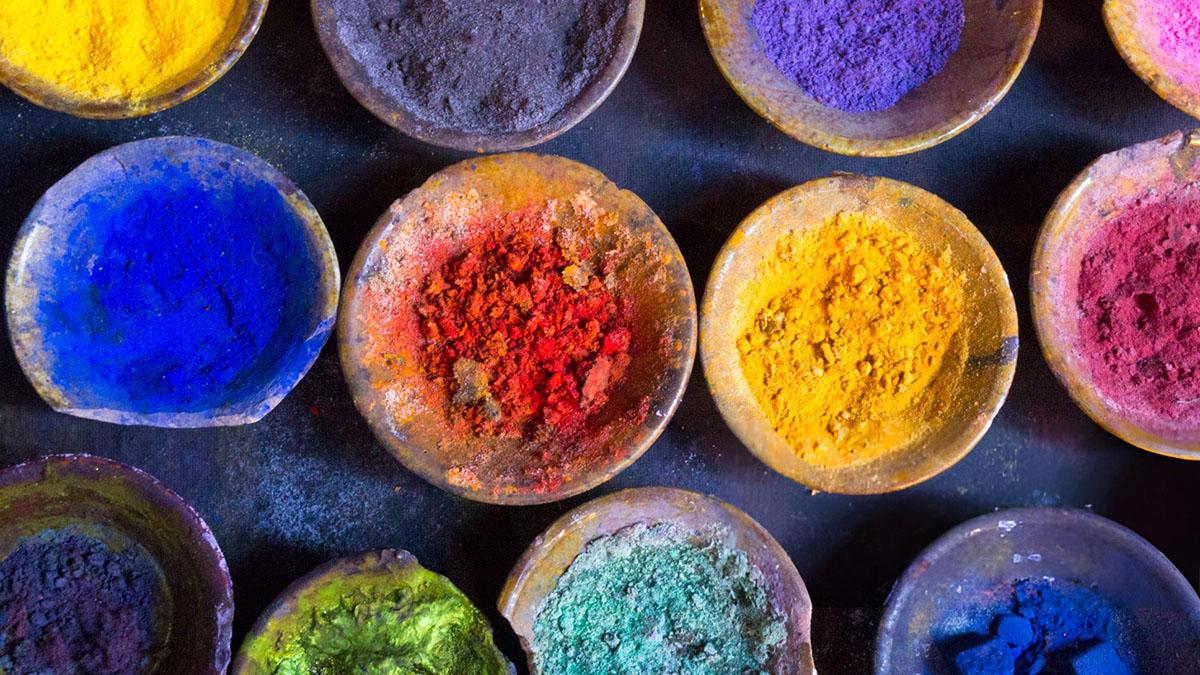
It is self-evident that Michael Harding is also a perfectionist about the mixture he uses in his paints. He likens his paint making to being a chef that uses only essential and ‘clean’ ingredients, and has been sourcing specialist pigments around the world for over 25 years. Some of these, like his hallowed Lapis Lazuli, are incredibly rare and difficult to source. Michael talks about Lapis Lazuli pirates, and the dangers experienced by those mining it. It explains the price of £94.20 ($137.22) for a 60ml tube of his paint by the same name.
Michael’s is an inspiring story about what happens when you invent a quality product to serve your own needs that goes on to become a commercial success. But he remains hands on, and when he’s not collecting horse droppings near his factory in Wales to make Stack Lead White in the Dutch tradition, he is on the international road promoting his paints and liaising with other artists. “Many artists bring or send me pigments, stories and visions of grandeur on the virtues of a colour,” he says.
That’s the role of my life, in a way. I’m not just about making paints and selling them for a profit. I am fundamentally involved with art: I collect it and I live it. I take huge pride and satisfaction in knowing that I genuinely do help artists.
How Do Michael Harding Paints Perform in Practise?
Obviously, I had to try these paints for myself. I purchased a handful of them and discovered that their reputation is well deserved and that the quality is genuinely superior to anything I have used before. Where I might need a great big squeeze of, say, Cadmium Red in my usual brand, I only require the smallest amount of Michael Harding’s. Even the tiniest amount is super concentrated, so despite spending more my paint is actually going further. The colours are vibrant and inspiring to work with.
The high pigment load in Michael Harding paints results in vibrant colors and excellent covering power. The smooth, buttery consistency allows for easy blending and impasto techniques. However, it’s worth noting that the absence of driers may lead to longer drying times, especially for colors containing linseed oil.
Artists who use Michael Harding paints rave about their quality. David Smith, RSW, says, “I use Michael Harding Oil paint because of the vibrant colour range. The quality of the ground pigments and the right amount of oil means I do not have to add any other medium to the paint to get the buttery consistency I enjoy working with.”
While the paints are undeniably high-quality, it’s important to consider the environmental implications of some pigments, such as cadmiums and cobalts, which can be potentially toxic. Additionally, traditional oil painting often involves the use of solvents like turpentine for cleaning brushes, which can be harmful to the environment if not disposed of properly.
Now if I can only sell a painting, I can continue to buy them without having to hide the receipts from my partner. Michael Harding paints are available at select art supply stores and online retailers, with prices varying depending on the color and pigment used. 40ml tubes typically range from $20 to $70, with rare pigments like Lapis Lazuli being more expensive.
“Michael is bringing out two new colours,” the visibly excited art shop assistant tells me on the weekend. In a few minutes, a handful of artists eager to discuss the news have gathered around and there’s a bit of a competitive edge between us as to who knows more about his paints. “Well I’ve just interviewed him,” I say smugly, enjoying my brief upper hand and the looks of admiration and envy I’m getting.