Jen Keane left Adidas in 2019 to grow leather in a laboratory. Not the plastic kind marketed as vegan. Real material, grown by bacteria that eat sugar water. She had a specific reason to believe this could work when everyone else had failed.
The fashion industry needed it to work. Traditional leather production involves intensive chemical processing. Most ‘vegan’ alternatives are plastics derived from petroleum. Bacterial cellulose offers a genuine third option: no animals, no petroleum, and naturally biodegradable. The question is not whether the industry needs this, but whether anyone can make the economics work.
The failures were spectacular. Bolt Threads spent over £160 million trying to turn mushroom fibres into commercial leather before pausing production in 2023. Dozens of other startups announced breakthrough materials. Most failed within five years. The pattern became so common it was predictable: impressive laboratory results, enthusiastic press coverage, then silence.
Free weekly newsletter
Get every new investigation directly in your inbox.
Brand Checks, Tech Checks, and verified sustainability investigations — delivered free.
Keane had studied these failures closely. She spent time at Bolt Threads in 2020 as a creative resident, watching the company struggle with the gap between what worked in controlled conditions and what worked at industrial scale. She saw exactly where the business model failed. Building new factories for unique materials required capital that venture funding could not sustain. The specialised equipment sat idle between production runs. Manufacturing costs never dropped low enough to compete with conventional leather.
So when she started Modern Synthesis with bioengineer Ben Reeve, they made one critical decision differently. Their bacterial leather would work on standard textile equipment. No specialised factories. No custom machinery. Existing drying systems, embossing tools, and finishing equipment could handle it. This approach cuts capital requirements dramatically, but presents a different challenge – convincing conservative manufacturers to adopt something new.
The science itself is elegant. Bacteria consume agricultural waste and produce microscopic fibres in two weeks, not the months required for cotton or conventional leather. Keane explains why this matters: ‘Cellulose is the natural building block of the natural world and it’s everywhere for a reason because it naturally feeds into the Earth’s own systems for circularity.’
These bacterial fibres are stronger than steel at the molecular level, but the real breakthrough is how they behave. ‘Because they’re so small, they’re very fine and very strong,’ Keane says. ‘They have this ability to bind to each other and lock together, which makes them sort of a natural adhesive. So you can create really strong structures using these tiny fibres without having to add in other binders.’ Woven with hemp, they form sheets that look and bend like leather but contain no petroleum and no animal hide.
Keane’s background at Adidas explains the strategic approach. She spent years managing their ocean plastic programme, integrating recycled materials across global supply chains. She knows what separates laboratory curiosities from commercial materials. It is not just technical performance; it is whether existing factories can process it, whether designers know how to work with it, and whether the economics make sense for brands placing million-unit orders.
Fashion for Good selected them in 2022 after a nine month evaluation programme. WGSN, the industry’s forecasting authority, called them leaders. They became the first material supplier certified by Positive Luxury’s Butterfly Mark. Investors backed them with £5.6 million. The credentials are solid.
But six years in, only one commercial product exists.
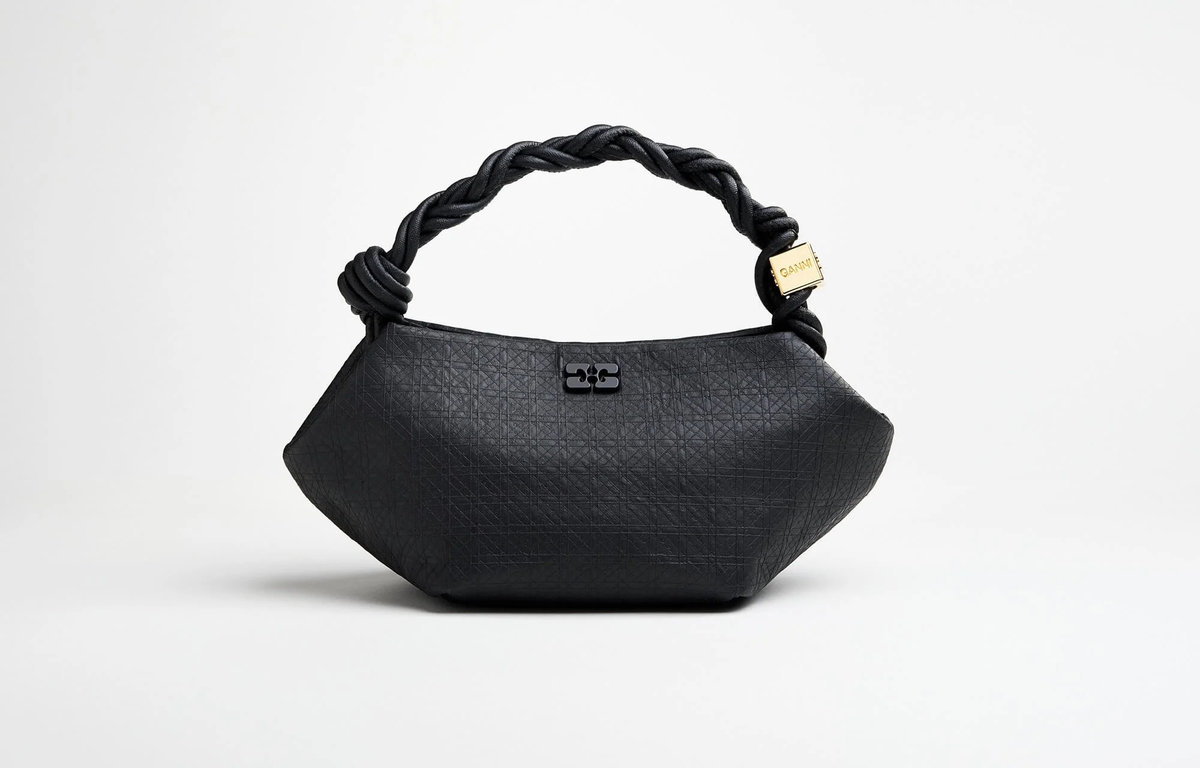
Danish brand GANNI commissioned a handbag prototype for the London Design Festival in September 2023. The collaboration proved standard sewing machines could stitch the material. Regular embossing equipment could press patterns into it. Keane calls these demonstrations critical: ‘These one-off showcase pieces are pivotal in evaluating a material’s workability and appeal to both designers and consumers, which paves the way for its eventual integration into everyday fashion.’
GANNI planned a commercial launch in early 2025. That date has passed. The bag is not in stores.
This gap matters because it is the same gap that killed Bolt Threads and everyone before them. Laboratory promise does not translate to commercial reality. The question facing Modern Synthesis is whether Keane’s different approach – designing for existing equipment rather than building new factories – actually solves the problem or just postpones it.
The material works, but with limitations. Keane’s team discovered how to stack different microbes in layers, like a sandwich. The bacteria go first, creating a base sheet, then they grow fungus directly on top. This addresses bacterial cellulose’s biggest weakness: it absorbs water like a sponge. Add the fungal layer and water suddenly beads up on the surface. Heat treatment permanently bonds the layers together.
The problem is consistency. The patent filing admits that ‘achieving impermeability without synthetic resins remains a primary research focus’. Some batches reliably repel water, whilst others do not. After years of development, consistent waterproofing remains elusive. When the material dries untreated, it becomes brittle and the flexible structure collapses.
Keane argues that the industry judges new materials by the wrong standard. ‘There’s a fallacy of comparing new materials to leather,’ she says. If something does not feel exactly like leather, people call it a failure rather than recognising it as a new category. She wants designers to create products around bacterial cellulose’s unique properties instead of forcing it to mimic leather.
That is philosophically sound but commercially challenging. Brands buying leather alternatives expect leather-like performance. Asking the entire fashion industry to redesign products around your material’s limitations is a hard sell. Especially when only one brand has publicly committed to working with you.
Keane admits the biggest struggle is capacity – she means production. Over 35 major brands want samples to test, but the pilot facility cannot produce enough material to supply them. This raises uncomfortable questions. Fashion companies routinely request samples from dozens of new materials; sampling costs nothing and requires no commitment. Placing commercial orders is another matter. GANNI remains the only brand to publicly showcase a product, and that product is still not commercially available.
The funding highlights the scale of the problem. Modern Synthesis has raised a total of £5.6 million. Bolt Threads raised over £160 million before running out of money. Keane acknowledges that material science ‘often takes a decade’ to reach mass market. They are six years in, with four more years needed. The math is brutal – £5.6 million will not cover another four years of development plus the costs of scaling to commercial production.
She is direct about the structural problem. Venture capital was ‘built for software companies’ that need little physical infrastructure and can scale fast. Material science requires different timelines and much more patient capital. Either Modern Synthesis finds investors willing to wait a decade, or it becomes an acquisition target before reaching commercial scale independently.
This pattern teaches broader lessons about commercialising novel materials. Keane is blunt about what startups need from brands: ‘If you’re going to work with a startup like us or an early-stage biomaterial company, this isn’t a traditional supplier relationship because we can’t afford to do that. We have limited funding, we’re moving fast.’ True partnerships require sharing risk before materials prove themselves commercially. ‘It’s about honesty and commitment and being able to take a bit of risk as well,’ she adds.
But one partner in six years suggests most brands prefer to wait. The power dynamic is not balanced. Startups need brand validation more than brands need unproven materials.
Her experience at Adidas proved essential. She understood factory capabilities before finalising material specifications. That ensured what they developed could actually be manufactured. Other biomaterial startups should hire supply chain experts early, before finalising their science. Technical performance means nothing if no factory can process your material.
The partnership between designer and scientist also matters. Keane brings aesthetic judgement and industry knowledge; Reeve brings biological expertise. Biomaterial failures often result from scientists creating technically impressive materials that brands find unusable, or designers creating beautiful prototypes that cannot scale. The interdisciplinary balance works better.
Modern Synthesis has proven that bacteria can produce material resembling leather. They have shown it survives manufacturing processes. They have demonstrated tunability through layered microbes. They have attracted industry recognition and seed funding. What they have not proven is manufacturing at commercial scale, hitting price parity with conventional materials, or convincing more than one brand to commit publicly.
The GANNI bag was supposed to launch in early 2025. The date passed without explanation. The gap between prototype and product remains unbridged.
Three endings are possible. They raise significant capital from patient investors and reach commercial production. A larger company acquires them for their technology before they scale independently. Or they join Bolt Threads in the biomaterial graveyard – another company that proved the science works but could not make the economics work.
The technology is real. The patents are solid. The team has credible expertise. But dozens of companies before them have checked all those boxes too. Whether Modern Synthesis breaks this pattern depends less on their bacteria and more on bridging the gap between what works in a London laboratory and what works at global scale.
Right now, watching that GANNI bag fail to appear, the gap looks as wide as ever.