
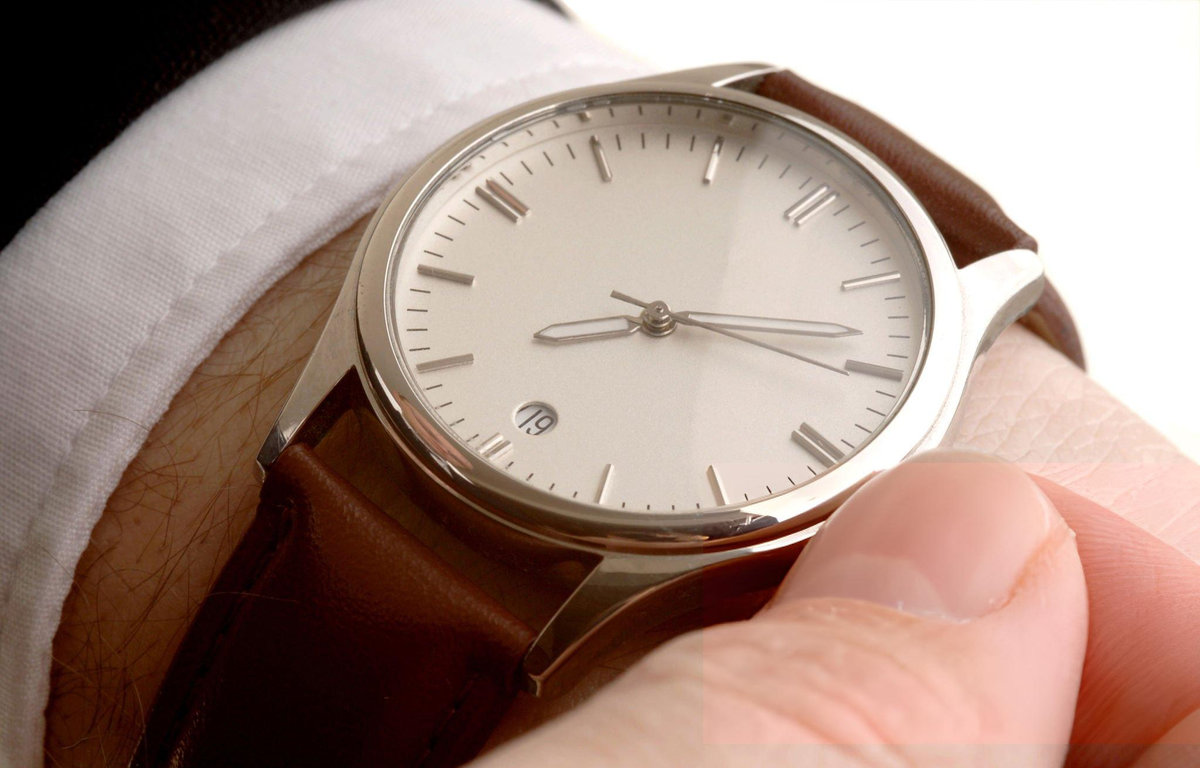
When choosing a new watch, there are many important factors to consider. Perhaps most important is knowing how to choose a watch size that fits you perfectly – there is nothing worse than an oversized or undersized watch, which will always look wrong, no matter how nice the watch is! With this in mind, this post will show you how to choose the perfect size.
Measure Your Wrist Accurately
Measuring your wrist accurately is a crucial step in selecting the ideal watch size, as it ensures both comfort and aesthetic balance. To start, use a soft, flexible measuring tape or a piece of string, and wrap it around your wrist just above the wrist bone, which is the area where the watch will sit comfortably.
It’s important to measure at this point because the fit here influences how the watch will feel during wear and ensures that the watch won’t slide around or pinch. Once you have wrapped the measuring tape or string around your wrist, mark the point where it overlaps, and then use a ruler to measure the length. This will give you the circumference of your wrist, which is an essential factor when choosing a watch case size.
However, it’s not just about raw measurement; the fit and comfort should be considered as well. Ideally, you want a watch that sits snugly without being too tight, allowing enough room for slight movement. A watch that is too tight can become uncomfortable, particularly over long periods of wear, while a watch that is too loose can slide around and feel unwieldy, compromising both comfort and style.
In addition to wrist circumference, consider factors like wrist shape and bone structure, as these can affect how the watch fits and feels. For example, individuals with slimmer wrists may find that a watch with a thinner case and strap provides a more proportional look, while those with broader wrists may prefer a larger case size for a balanced aesthetic. In some cases, adjustability of the watch strap can further help to fine-tune the fit. The goal is to ensure that the watch sits securely on your wrist, neither too tight to cause discomfort nor too loose to appear oversized, resulting in a piece that enhances your overall style without detracting from it.
Understand Watch Dimensions:
Next, you need to understand the different watch dimensions. Every watch is different, and there are various dimensions that affect the fit and appearance. The main dimensions include:
- Case diameter
- Thickness
- Lug-to-lug length (distance from one end of the case to the other)
Measuring all of these will give you a much better understanding of how the watch will sit on your wrist and look.
Match the Size to Your Wrist Type
When selecting the right watch size, it’s important to consider not only personal style but also the proportions of your wrist. The general rule of thumb is a helpful guide: those with smaller wrists (under 6.5 inches) tend to benefit from a watch with a case size between 36mm and 38mm. This size ensures that the watch doesn’t overpower the wrist, maintaining a more balanced, elegant appearance.
For individuals with medium wrists (between 6.5 and 7.5 inches), a watch between 40mm and 42mm is often ideal, offering a comfortable fit that’s neither too large nor too small. Larger wrists (over 7.5 inches) can comfortably wear watches with case sizes of 42mm and above, as they provide a more proportionate and bold look without looking disproportionate. However, these guidelines are not set in stone. Personal preferences, fashion trends, and the overall design of the watch can influence one’s choice.
For example, an oversized watch may appeal to those seeking a more assertive, fashion-forward statement, while others may prefer the refinement of a smaller, more understated piece. In the world of watchmaking, where design and function intersect, the key is finding a size that not only complements the wrist but also aligns with an individual’s broader style preferences.
Furthermore, certain watch designs—such as those with thinner bezels—can allow for a larger dial without overwhelming smaller wrists, while chunkier designs may look more balanced on larger wrists. Ultimately, the watch should be a reflection of both functional comfort and aesthetic harmony, underscoring the wearer’s personal style.
Consider Strap & Material Proportions
It is not just the size of the watch that needs to be considered. The strap width, length, and material will also impact the overall fit and balance. In luxury watches, strap proportions are carefully balanced to enhance comfort and style. For example, leather appears slimmer, while metal gives a larger, bolder look. Keep in mind that you can always change the strap if you wish.
Cultural commentary
Watch size preferences offer insightful clues into an individual’s personal style, professional context, and the broader collecting culture. In terms of personal style, larger watches are often associated with bold, contemporary fashion choices, while smaller, more delicate timepieces might reflect a taste for classic, understated elegance.
Professionally, the size of a watch can signal conformity or individuality; for example, a sleek, minimal design is often favoured in corporate environments for its subtlety, whereas oversized watches may be more common in creative fields, symbolising a penchant for statement-making accessories.
The collecting culture, on the other hand, reveals a fascination with craftsmanship, heritage, and rarity. Enthusiasts might gravitate toward vintage models or limited editions that offer a unique balance of size, function, and historical significance, where size is not just a matter of aesthetics, but of rarity and value. In all, a watch is more than just a tool for telling time—it becomes an extension of one’s identity, reflecting both individual taste and cultural influences.