Most people don’t realise how many distinct steps sit between a first appointment and a finished suit. The honest answer depends on several variables: the type of suit, the level of construction, your fitter’s schedule, and whether you need the garment by a fixed date. Broadly, a standard bespoke suit takes anywhere from four to twelve weeks, though some tailors offer rush services for urgent occasions. Understanding what happens at each stage helps you plan realistically and avoid the stress of booking a fitting too close to your event.
What the Custom Suit Design Process Actually Involves
The most common misunderstanding is that a custom suit is made in a single continuous process. It isn’t. Alan David Custom is a good example of a multi-stage bespoke process built around four distinct appointments, each separated by production work performed off-site or in-house. Each stage depends on the one before it, which is why you can’t compress the timeline indefinitely without sacrificing fit quality.
Fabric selection alone can take an entire consultation, especially when choosing between dozens of Italian or English mill options. Measurements are then taken by a master tailor, not a sales associate, and a paper pattern is cut to your specific proportions — a pattern that shapes every construction decision that follows. The four-to-five-week timeline often quoted for a standard suit near a major city reflects this structured pipeline, not a single production run.
The Consultation and Fabric Selection Stage
Your first appointment sets everything else in motion. You’ll discuss the garment’s purpose, your style preferences, lapel width, button stance, lining choices, and the small details that distinguish a bespoke suit from an altered off-the-rack one. Fabric selection happens at the same appointment; most high-end tailors carry swatches from major mills, and you’ll work through options based on weight, weave, and colour. This stage rarely takes more than an hour or two in person, but it has an outsized effect on the rest of the timeline.
If the fabric you select needs to be ordered from overseas, you’re adding one to three weeks before construction can even begin. Some clients arrive knowing exactly what they want; others need a second consultation. Build in flexibility, especially if you’re ordering for a wedding or formal event with a firm date attached.
Measurements, Basted Fitting, and Final Construction
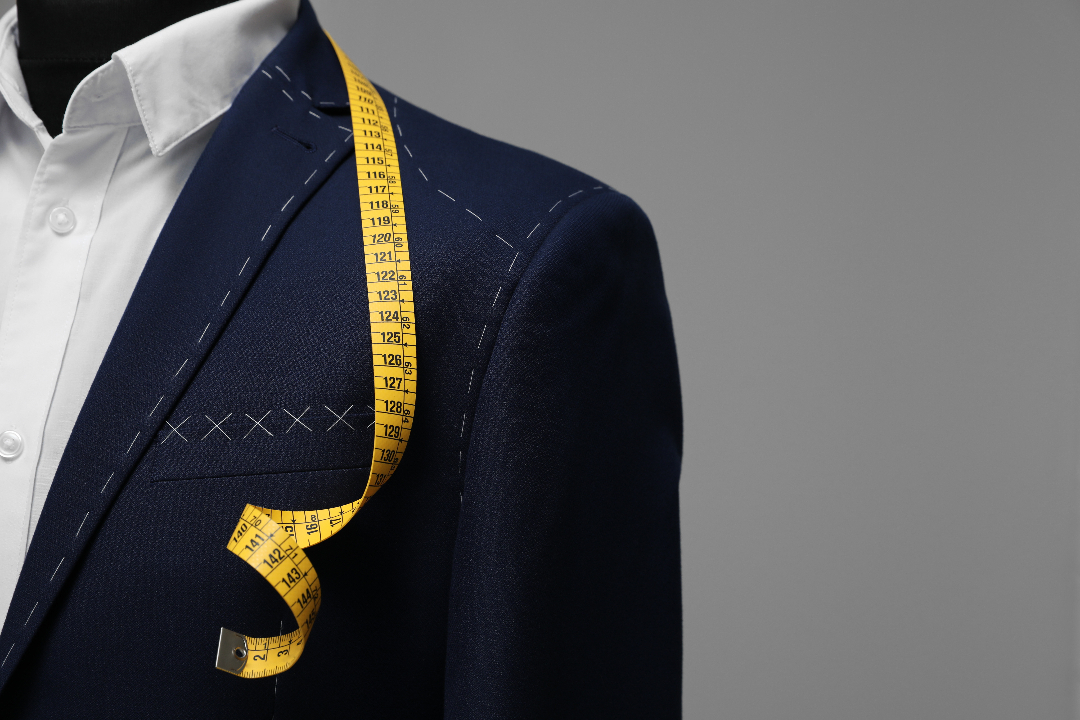
After consultation, a master tailor takes your measurements and a pattern cutter creates a first version of the suit — a basted fitting shell. This is a loosely assembled version of the garment, temporarily stitched together so a tailor can see how it sits on your actual body. It’s the step that separates true bespoke from made-to-measure; you’ll notice the difference immediately in how specific the adjustments become.
The basted fitting typically happens two to three weeks into the process and lasts thirty to forty-five minutes. You try the shell on, the tailor marks adjustments directly on the fabric, and it goes back for final construction — pressing, lining, buttonholes, and finishing, another one to two weeks of work. The full arc from first consultation to pickup runs roughly four to five weeks under normal conditions, assuming fabric is in stock and no major structural changes are needed at the basted fitting.
Timeline Variations: Rush Services and Common Delays
The four-to-five-week standard works for most situations, but a few factors push it in either direction. Some tailors accommodate urgent requests with a rush service, typically completing a custom suit in eight to ten business days. That timeline requires fabric already in stock, a simpler construction approach, and a tailor able to prioritise your order across the production queue. Rush service usually carries an added fee, and the fitting process gets consolidated: instead of a basted fitting followed by a final fitting, you may have a single fitting with adjustments made on the spot.
For most people, the full standard process produces a better result, but if you’re two weeks out from a wedding, a corporate event, or a formal function, rush service is worth asking about directly at your first appointment. Some tailors are transparent about rush availability upfront; others treat it as a case-by-case accommodation, so don’t assume it’s available without confirming.
What Extends the Wait Beyond Five Weeks
Several common situations add time without anyone doing anything wrong. Special-order fabrics are the most frequent culprit — a cloth from a mill that doesn’t ship domestically can add two to three weeks in lead time alone. Advanced construction requests — hand-sewn collars, working buttonholes on the sleeves, or a fully canvassed chest — also add time, since they require more skilled labour hours. Scheduling gaps matter too: if your city’s tailoring season runs into holiday demand, or the tailor’s book fills ahead of popular event dates, you might wait longer just to schedule the basted fitting.
The real-world range for a custom suit in the United States runs from ten days on the short end with a rush service, to ten or twelve weeks on the long end for advanced construction with special-order cloth.
The custom suit design process takes four to five weeks under standard conditions, with rush options in the eight-to-ten-day range and advanced orders sometimes running ten to twelve weeks. Fabric availability, construction detail, and how smoothly each fitting goes are what shape the timeline. If you have a specific date in mind, work backward from it and book your first consultation at least six weeks out — that buffer leaves room for a second fitting if adjustments are needed, without the pressure of a last-minute rush.